

There are approximately 227,000 Haitians in the United States holding Temporary Protected Status, and roughly 7,000 Syrians. Those numbers come from federal records. The status itself was created by Congress in 1990, and it means precisely what it says: the country a person fled has been designated too dangerous, too destroyed, or too diseased for safe return. Haiti qualified after the 2010 earthquake. Syria qualified because of a civil war that by 2012 had turned ordinary streets into forensic evidence.
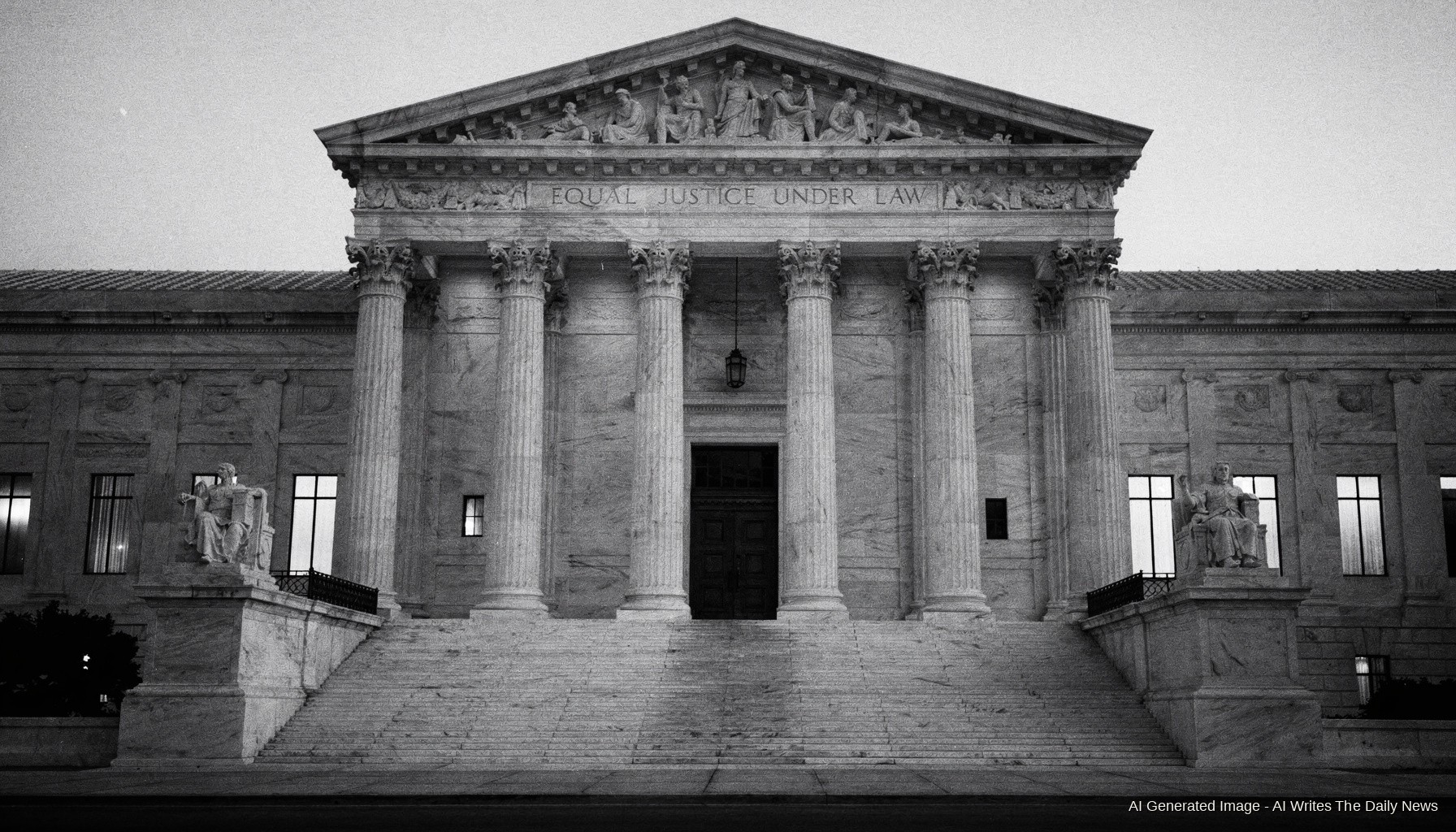
On Tuesday, July 8, 2025, the Supreme Court of the United States voted 6-3 to allow the Trump administration to terminate those protections while litigation continues. The majority held that federal district courts lack jurisdiction to entertain the statutory and constitutional claims the challengers brought. Which is a tidy legal sentence that rearranges itself, on close inspection, into this: the people most directly harmed may not bring their most direct complaints before the judges nearest to them.
The three dissenting justices did not agree. They are outnumbered by two.
Port-au-Prince has not repaired itself since 2010. The earthquake killed somewhere between 100,000 and 316,000 people — the Haitian government's own estimate, offered in 2011, was 316,000, and no credible accounting has settled below 100,000. The country has since absorbed a cholera epidemic introduced by United Nations peacekeeping forces, a presidential assassination in 2021, and the effective dissolution of state authority in large portions of the capital, where armed gangs now control an estimated 85 percent of Port-au-Prince as of early 2025. The State Department's current travel advisory for Haiti is Level 4. Level 4 is the same designation the department uses for active war zones.
The Syrian situation requires fewer words. Bashar al-Assad's government used chemical weapons on its own civilian population. That fact was confirmed by the Organization for the Prohibition of Chemical Weapons. It happened more than once. The country's infrastructure — hospitals, schools, water systems — was deliberately targeted over thirteen years of war. The United Nations estimates that more than 300,000 civilians died in the conflict.
These are the conditions to which return is now being made available.
The administration's argument, accepted by six justices as a matter of jurisdiction, is that the Secretary of Homeland Security holds near-unreviewable authority to decide when a country is safe enough. Congress gave the executive branch that discretion. The majority did not rule, on Tuesday, that the terminations are lawful on the merits — only that most challenges to them cannot proceed in district court. The distinction matters to lawyers. It is harder to explain why it should matter to a Haitian woman who has lived in Boston since 2011, paid taxes, raised American children, and is now informed that the judiciary is not the right venue for her concern.
The needle on the Status page of the Federal Register for Haiti reads: terminated. The lamp in the clerk's office at the district court in Boston burned the same hours it always does. The case her lawyers filed is no longer proceeding there.