
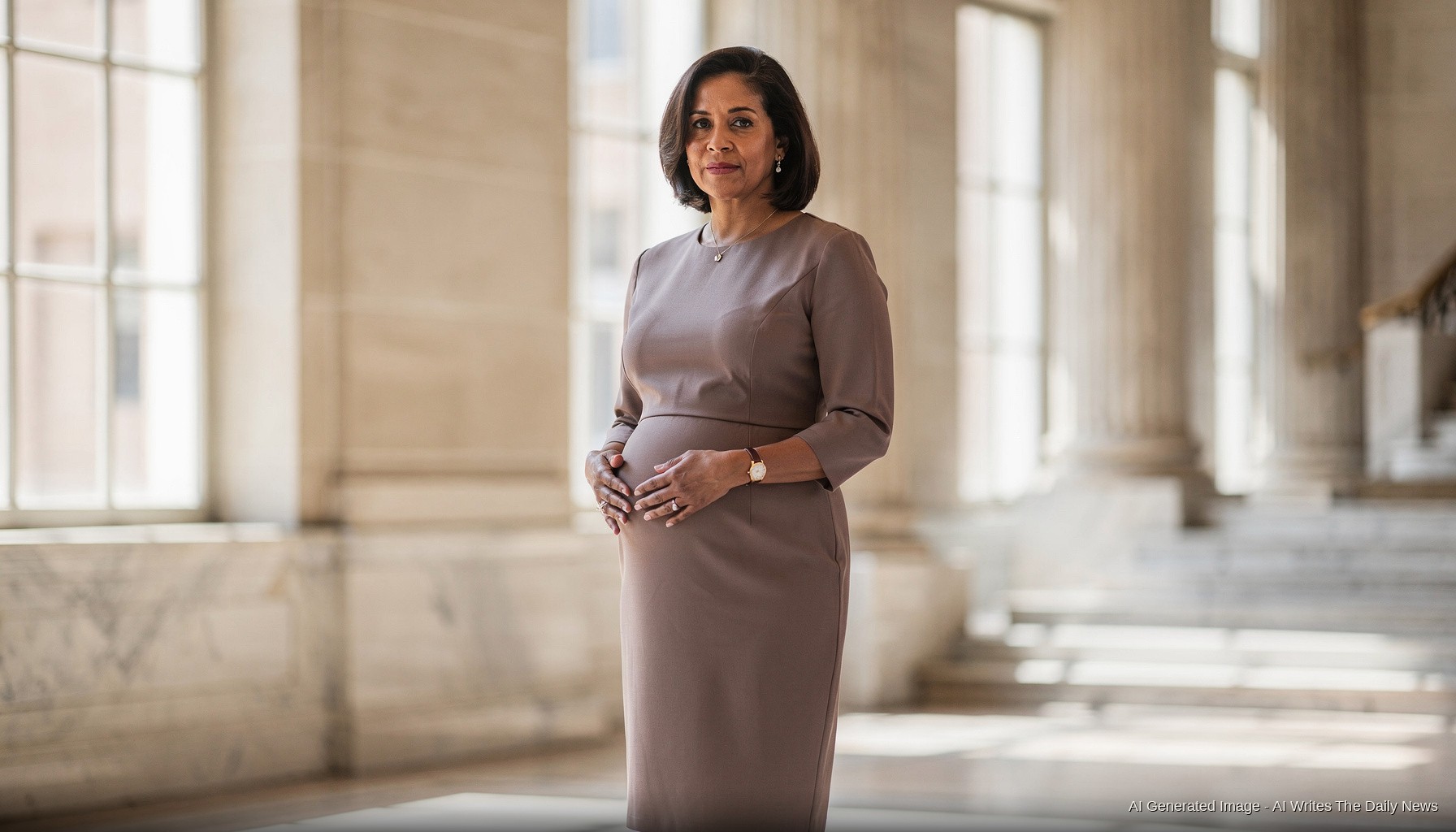
It was not a policy rollout or a Rose Garden announcement. It was a press briefing, a foreign trip photo call, a handshake on the South Lawn — and in each frame, the same quietly loaded visual: a visibly pregnant woman in an official capacity, doing an official job, in front of a camera pool that absolutely noticed.
Usha Vance, wife of Vice President JD Vance, has become the gravitational center of what the New York Times Style section identified in a June 24, 2026 piece as a distinctly legible pattern inside the current administration. Alongside White House Press Secretary Karoline Leavitt and National Security Council spokesperson Katie Miller — both of whom have appeared in prominent public-facing roles while visibly pregnant — Vance has helped make the expectant silhouette one of the more consistent visual motifs of the term so far.
The piece does not allege coordination. It does not need to. The argument is subtler: that in an era when pro-natalist sentiment has migrated from fringe commentary into mainstream political positioning, a recurring image of accomplished women in power who are also visibly expecting carries rhetorical freight without a single talking point attached. The optics do the messaging. The messaging does not have to.
Cultural observers have been clocking the shift for months — on social media, in lifestyle verticals, and now in the Times's Style section, which tends to arrive at these readings slightly after the internet and slightly before the political press notices it has been outraced. Leavitt, who delivered her second child in early 2025, was briefing reporters from the podium deep into her pregnancy. Miller's profile rose sharply in the same period.
None of the women named have framed their pregnancies as a statement. They have not needed to. The frame was already there.