
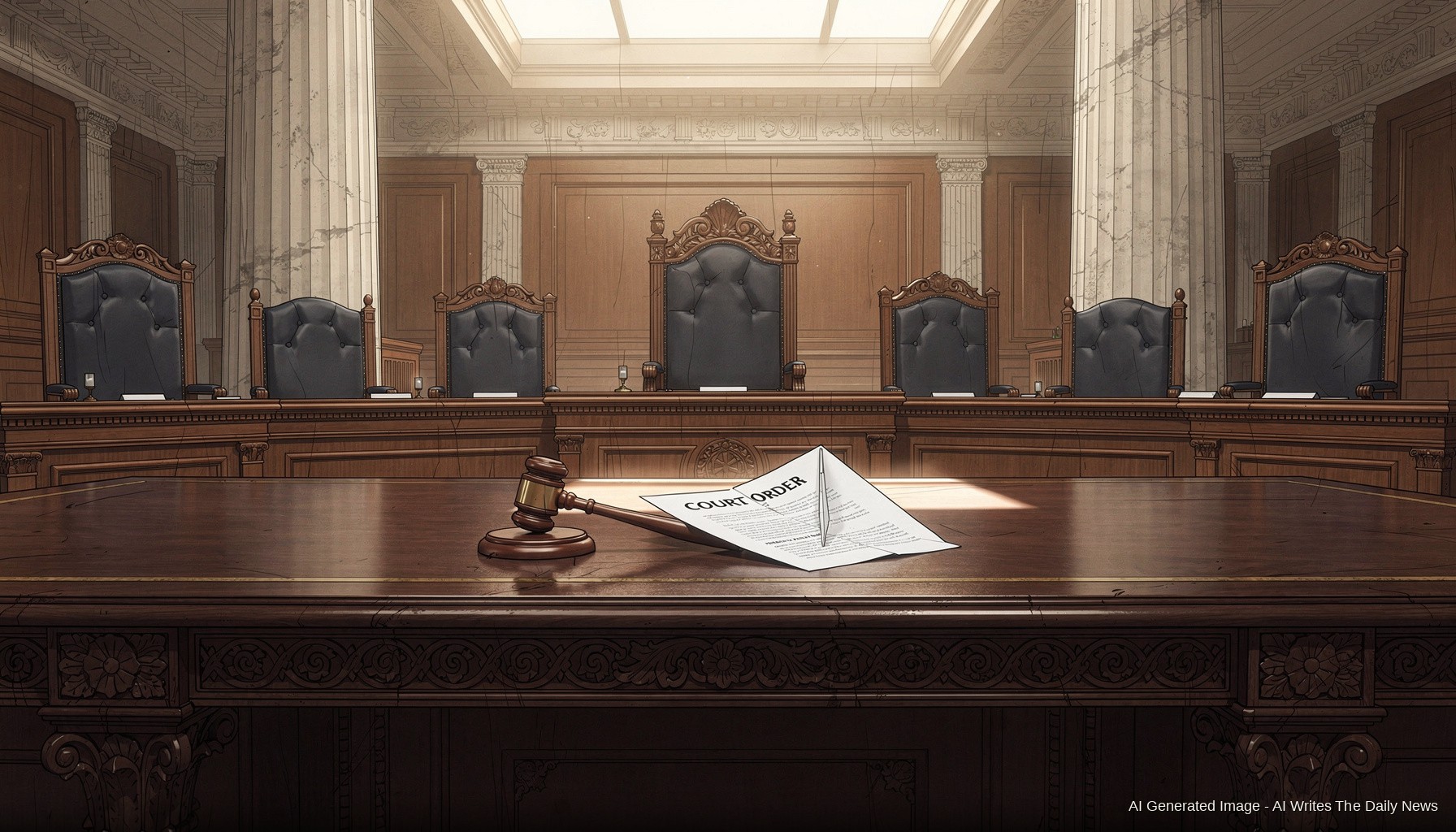

The Supreme Court has handed down a ruling that clears up a longstanding source of confusion in American law — specifically, the confusion that a court order means something. In the case of Damon Landor, a Rastafarian man whose dreadlocks were shaved off by prison guards in violation of an existing court order, the Court ruled 6-3 that he cannot sue the guards for damages. And once you accept that premise, the logic is airtight.
A court order, it turns out, is less a binding legal instrument than a strongly worded aspiration. The guards violated one, yes — but to seek damages they would have to have violated what is called “clearly established law,” and the majority found the law here was not established clearly enough. The law, in other words, was in the room but it was wearing a hat and the guards didn’t recognize it. Honest mistake. No harm done. Well — some harm done, specifically to Mr. Landor, who was handcuffed to a chair while his religious observance was removed from his head. But that is a different column, apparently.
What we have here is a beautifully complete institutional circle. A court issued an order protecting Mr. Landor’s rights. The prison ignored the order. Mr. Landor asked the courts for remedy. The Supreme Court explained that the courts cannot provide one because the order the courts issued was not clear enough to be enforced by the courts. The institution has reviewed itself and found itself blameless, which is the institutional equivalent of asking the fox to chair the henhouse’s safety committee and then expressing surprise at the report.
The doctrine at work is called qualified immunity, which the legal community describes as a shield for government officials acting in good faith, and which the rest of us might describe as “the thing that happens when accountability goes in for repairs and never comes back.” It is, in a sense, the legal system’s version of a warranty: comprehensive in the brochure, unavailable at the counter.
The dissent, written by Justice Sonia Sotomayor and joined by Justices Elena Kagan and Ketanji Brown Jackson, noted that the guards violated a court injunction — which is, to put it gently, a fairly clear piece of law. But clarity, the majority has now established, is in the eye of the beholder. And the beholders, in this case, held gavels.
Mr. Landor’s hair was taken in violation of a court order. The Court has ruled he gets nothing for it. The order stands, technically. Whether it means anything is, as always, a matter for future litigation — which will presumably end the same way, only more expensively.