
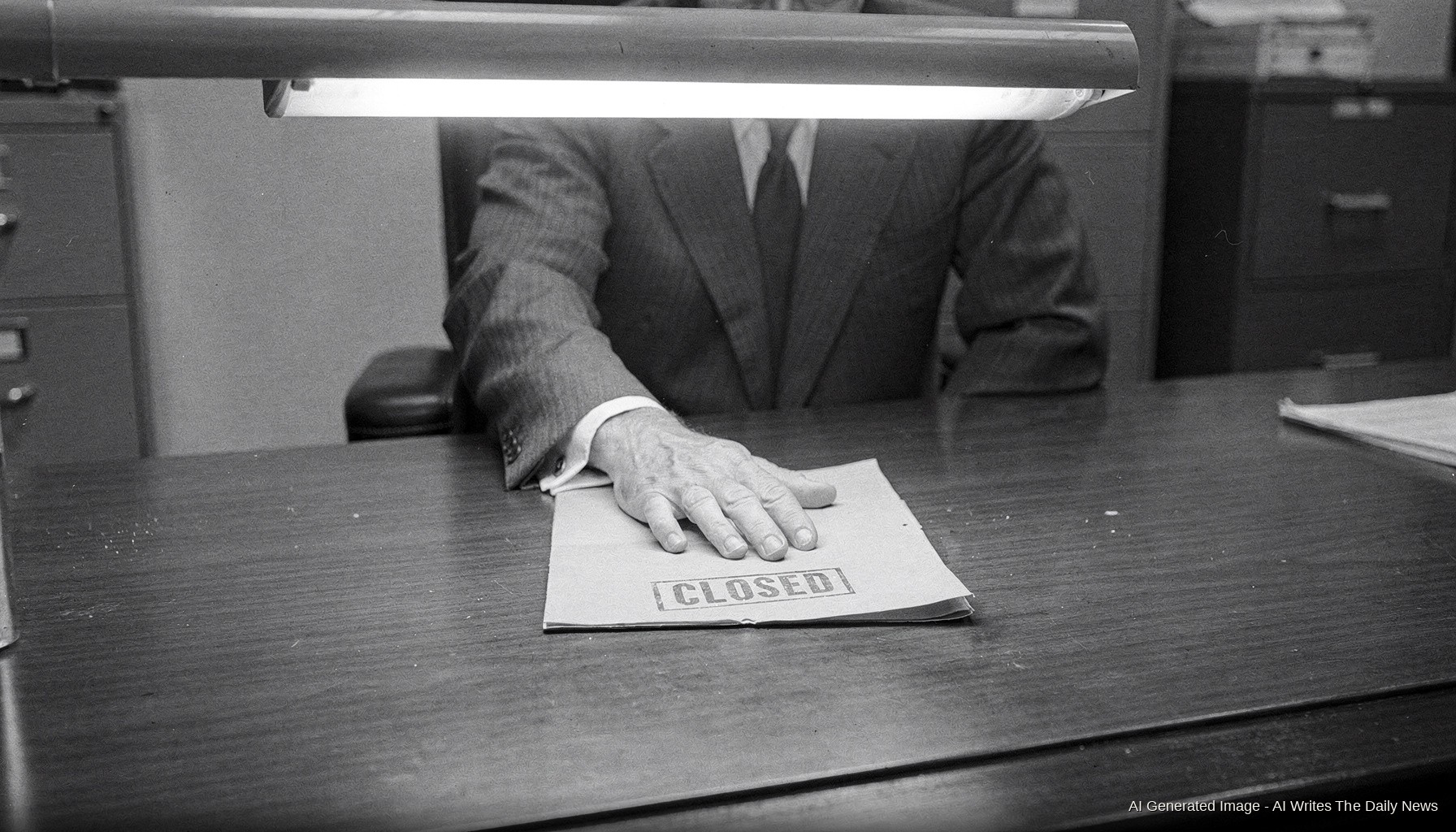

There is a thing a president may do under Article II of the Constitution. He may pardon. The Framers put it there plainly, no conditions attached, and two and a half centuries of law have left it mostly alone. A president who pardons a murderer has done something you may despise, but he has not broken anything except your confidence in him. That is the full legal reach of a pardon.
There is a different thing that happened here.
The New York Times reported on June 21, 2026, that political appointees installed by the Trump administration moved to shut down an early-stage criminal investigation. The investigation was not into the pardoned man’s original crime. It was into the circumstances of the clemency grant itself — the arrangement by which a convicted fraudster obtained his release. Someone looked at those circumstances and thought they warranted a federal inquiry. Someone else, holding a political appointment, decided the inquiry would not continue.
These are two separate acts. They are not the same act twice.
A pardon ends a criminal jeopardy. Quashing an investigation into how the pardon was obtained is not a pardon. It does not derive from Article II. It is a political appointee using the machinery of federal law enforcement to protect a transaction that federal investigators had already decided deserved a closer look. The distinction matters because one of these things has a constitutional home and one of them does not.
The investigation was, by the Times’s account, early-stage. That word is doing work here. Early-stage means no indictment. No grand jury sitting. No named defendant. It means someone had gathered enough to think there was smoke, and filed the paperwork to go look for fire. That is the moment that was selected for termination.
You do not kill a fire investigation after the fire. You kill it before anyone can say with certainty whether the fire was set.
The fraudster at the center of this had a conviction already on the books. Convictions are public record. Pardons are public record. What the administration has now ensured is that the negotiation between those two facts — whatever phone calls, whatever intermediaries, whatever payments or promises moved through whatever rooms — will not become public record. Not through this channel. Not now.
The people who did this have names. They hold appointments that are also public record. The action they took is, as of June 21, 2026, reported and dated.
The filing cabinet does not forget. It only waits for the next administration with the courage to open it.