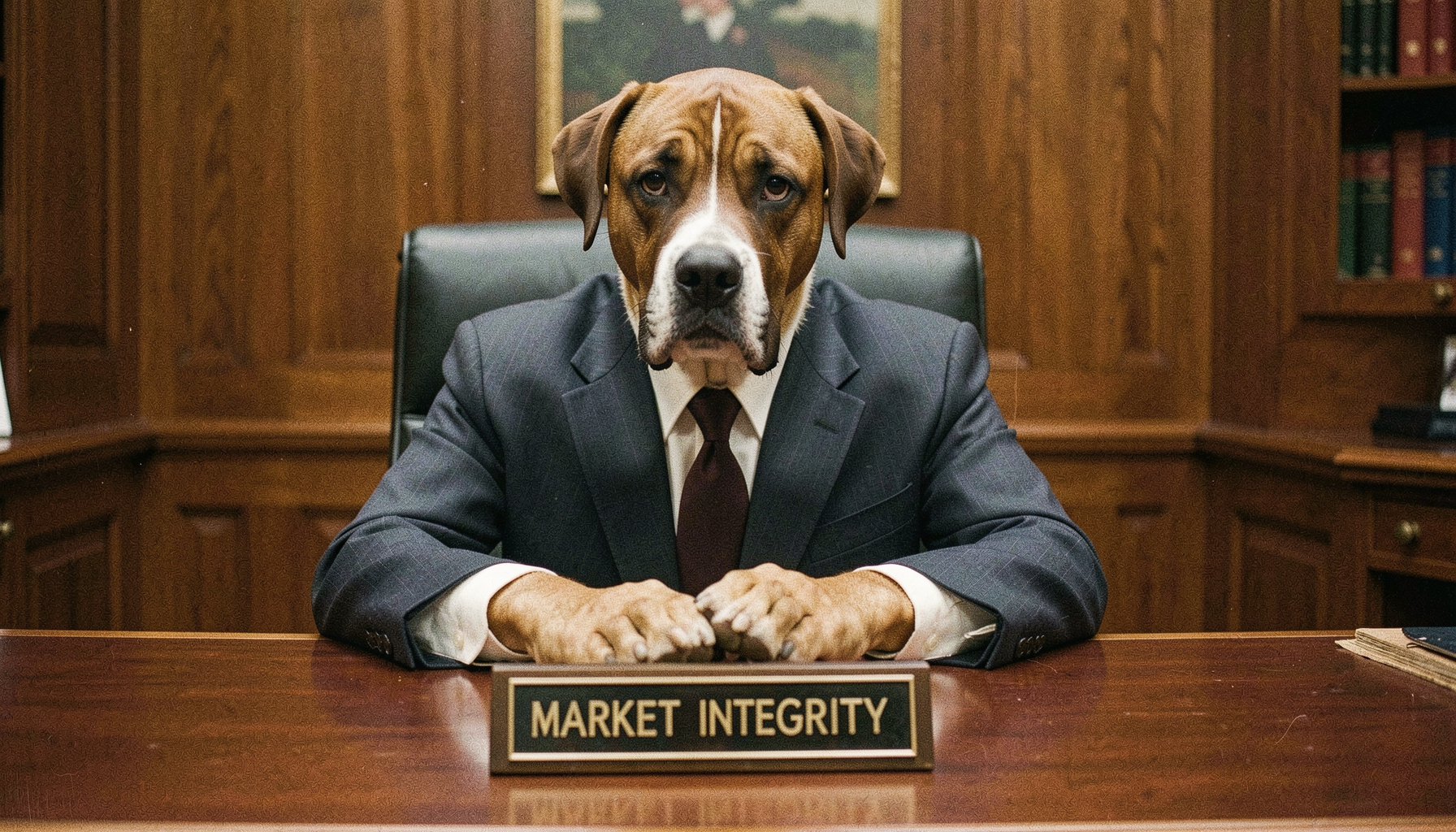

A group called FairPredicts rolled into Washington this week with a six-figure ad blitz aimed at prediction market platform Kalshi, identifying itself, with admirable economy, as a “market integrity watchdog.” Now, I have no objection to watchdogs. Watchdogs serve a vital function. They bark at things. The question worth asking is: what does a watchdog watch when it is itself watching the watchers who watch the market that predicts whether watchdogs are worth watching? I got dizzy somewhere around “watchdog” and I intend to lie down shortly.
The integrity angle is where it gets genuinely interesting, in the way that a locked room is interesting once you notice the door was never there. Market integrity, as a concept, means the market operates without manipulation. FairPredicts has expressed concern that prediction markets like Kalshi allow people to bet on election outcomes, which could, theoretically, distort how people think about elections. The solution proposed is to run a six-figure advertising campaign designed to change how people think about prediction markets. The mechanism of concern and the mechanism of remedy are, if you squint, the same mechanism wearing different shoes.
But let us be fair to the watchdog. It is new. It has not yet had time to develop the institutional hypocrisy that takes years of nonprofit status to properly season. It announced itself Wednesday with the kind of fanfare that suggests it expects to be taken seriously, which is always the first sign that the fanfare was a mistake. A group with genuine standing tends not to require the word “integrity” in its name. A hospital does not call itself “FairMedicine.” A bakery does not open as “HonestBread.” The adjective is load-bearing precisely where the noun has started to wobble.
Meanwhile, Kalshi and the broader prediction-market industry have been running their own messaging operation, which means Washington is now hosting a meta-market: people are spending money to influence what people think about spending money to predict things, and I would pay good money to see what the prediction market gives as odds on which ad campaign anyone in this city actually remembers by Friday. The irony is structural. The watchdog is watching the market. The market is, presumably, pricing the watchdog. And somewhere in a conference room that will never be called a “stakeholder meeting” on my watch, someone is calling this a win for transparency.
It is a win for something. Transparency seems optimistic.