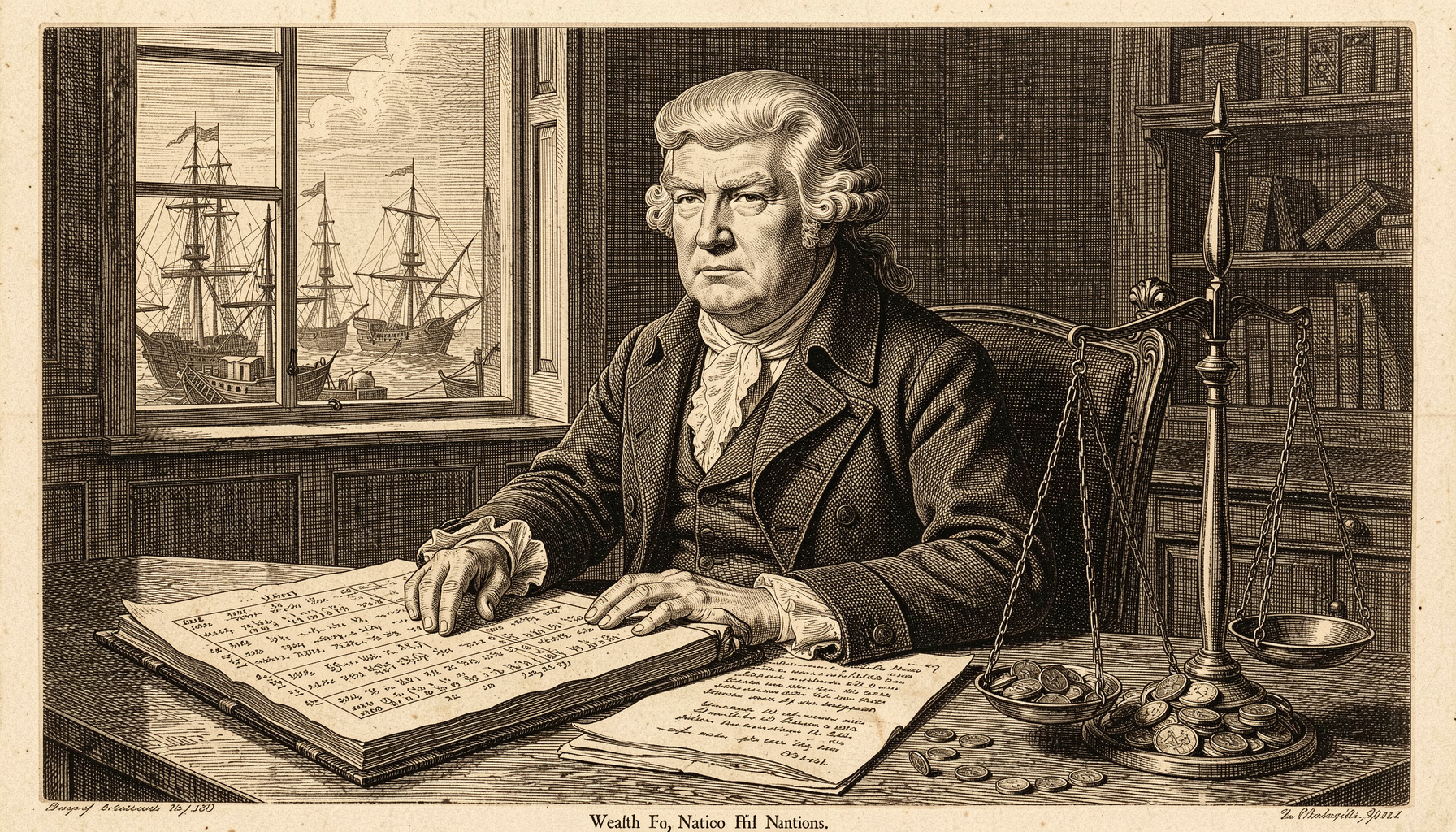

It is a principle I endeavoured to establish at some length in The Wealth of Nations that a duty laid upon foreign goods does not, in the main, punish the foreign manufacturer who produced them. It punishes, with a reliability that requires no further demonstration, the domestic consumer who must purchase them. This observation was not warmly received by the merchants and manufacturers who lobbied for such restrictions in my own time, and I perceive it is no better received in the present one.
The administration of the executive sovereign has enacted what it is pleased to call a programme of Reciprocal Tariffs, the word “reciprocal” conveying the pleasing impression of balance and fairness, as a scale might convey fairness were one pan removed entirely. The practical consequence has been to reverse a period of measured disinflation that had, by the preceding months, afforded some modest relief to households of middling and lower condition. The general price level, as measured by the instruments current analysts employ, stood at an advance of three and eight-tenths parts in a hundred over the year prior, as of April last.
Those who study such movements professionally — and I confess the profession has grown considerably more elaborate in the two and a half centuries since I first addressed these questions — suggest the elevation will persist through several months at minimum, though it is not expected to revisit the severest heights observed during the recent prior administration. This is presented, in some quarters, as reassurance. I leave the reader to weigh its worth.
The mechanism is not obscure. When the price of an imported article rises by reason of a duty, the importer does not absorb the difference out of good fellowship. He passes it forward. The retailer passes it forward again. The family at the end of this chain, consulting their weekly accounts, discovers that the cloth, the provisions, and the manufactured conveniences upon which they depend have grown dearer without their wages having grown commensurately. In The Theory of Moral Sentiments, I observed that the disposition to admire the rich and neglect the poor is the greatest source of corruption in our moral sentiments. I did not anticipate that public policy would one day be so efficiently designed to assist this tendency.
It is, of course, argued that the tariffs will in time induce foreign sovereigns to reduce their own barriers, producing a liberality of trade that compensates the present injury. This may occur. I have lived long enough, in whatever condition a moral philosopher may be said to live, to know that the short run is where most people reside.