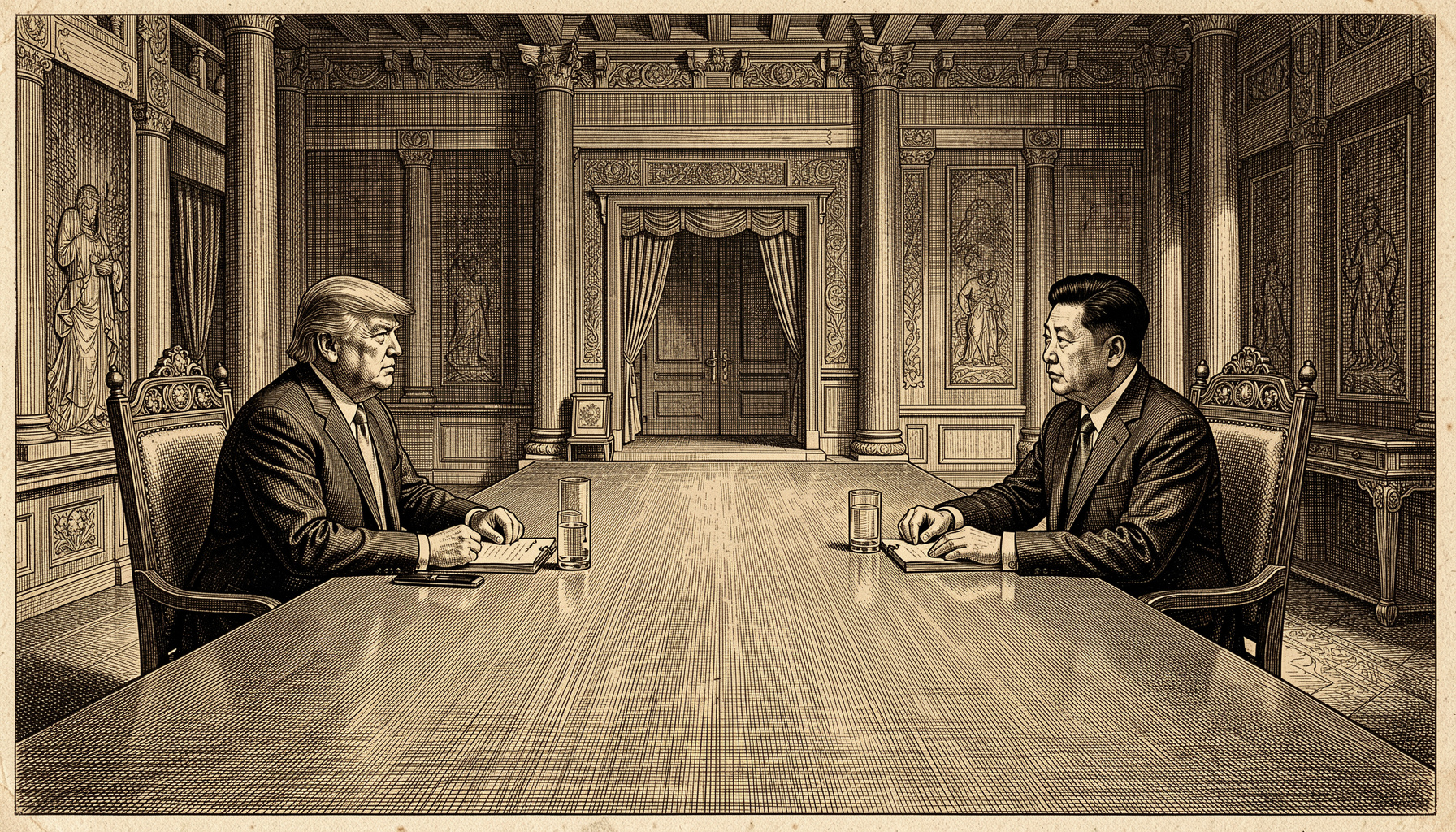

It has long been my observation, recorded at some length in the Wealth of Nations, that the wealth of a nation is not the glittering stock of its treasury but the annual produce of its land and labour — a produce which depends, more than sovereigns are generally pleased to acknowledge, upon the free and unimpeded exchange of goods between willing parties at honest prices. It is therefore with the most earnest attention that I have followed the recent movements of the President of the United States, who has returned from the capital of China having treated with President Xi Jinping upon the matters of trade, the governance of that island which sits between two ambitions, and the price at which energy may be had in a world newly disordered by war.
The meeting at Peking is reported to have touched upon the tariffs and counter-tariffs which both nations have, with considerable industry, erected against one another these several years past. I have written plainly that such impositions, however gratifying to the manufacturer who petitions his sovereign for their protection, are in their general effect a tax upon every other subject of the realm who must purchase what that manufacturer produces. A tariff is not a wall behind which prosperity shelters; it is a toll-gate at which it is made to pay. When two great trading nations erect these gates against one another simultaneously, the arithmetic of mutual impoverishment proceeds with the mechanical regularity of a mill-wheel.
Yet it is the matter of energy upon which I find the present circumstance most instructive. The war prosecuted in Persia — that ancient nation now called Iran — has introduced into the markets for oil and combustible fuel a degree of uncertainty which the price of those commodities reflects with the customary severity. The sovereign who wages war at a distance must reckon that the markets for provisions do not observe truces. Whatever the outcome of the discussions in Peking regarding the supply and passage of energy, the household that heats itself with fuel bought at an elevated price will not be much consoled by the diplomatic courtesies exchanged ten thousand miles away.
I note with interest that the President's return coincides with what the gazettes describe as mounting economic anxiety among the population. This is not, I think, a disposition to be wondered at. The Theory of Moral Sentiments reminds us that the impartial spectator within each breast is quite capable of perceiving, without the assistance of any minister of state, when the price of necessaries rises faster than the wages by which they are purchased. No proclamation of success abroad will long quiet that inner voice.
It remains to be observed whether the agreements reached — or, as is common in these high conferences, half-reached, deferred, and committed to further conversation — will in time reduce the cost of what the manufactory requires and what the labouring family burns through the winter. The distance between a communiqué and a lower price at the fuel-merchant's counter is, in my experience, a very considerable one, and the journey between them is made longer still when the underlying cause of the disturbance continues to fire its cannon.