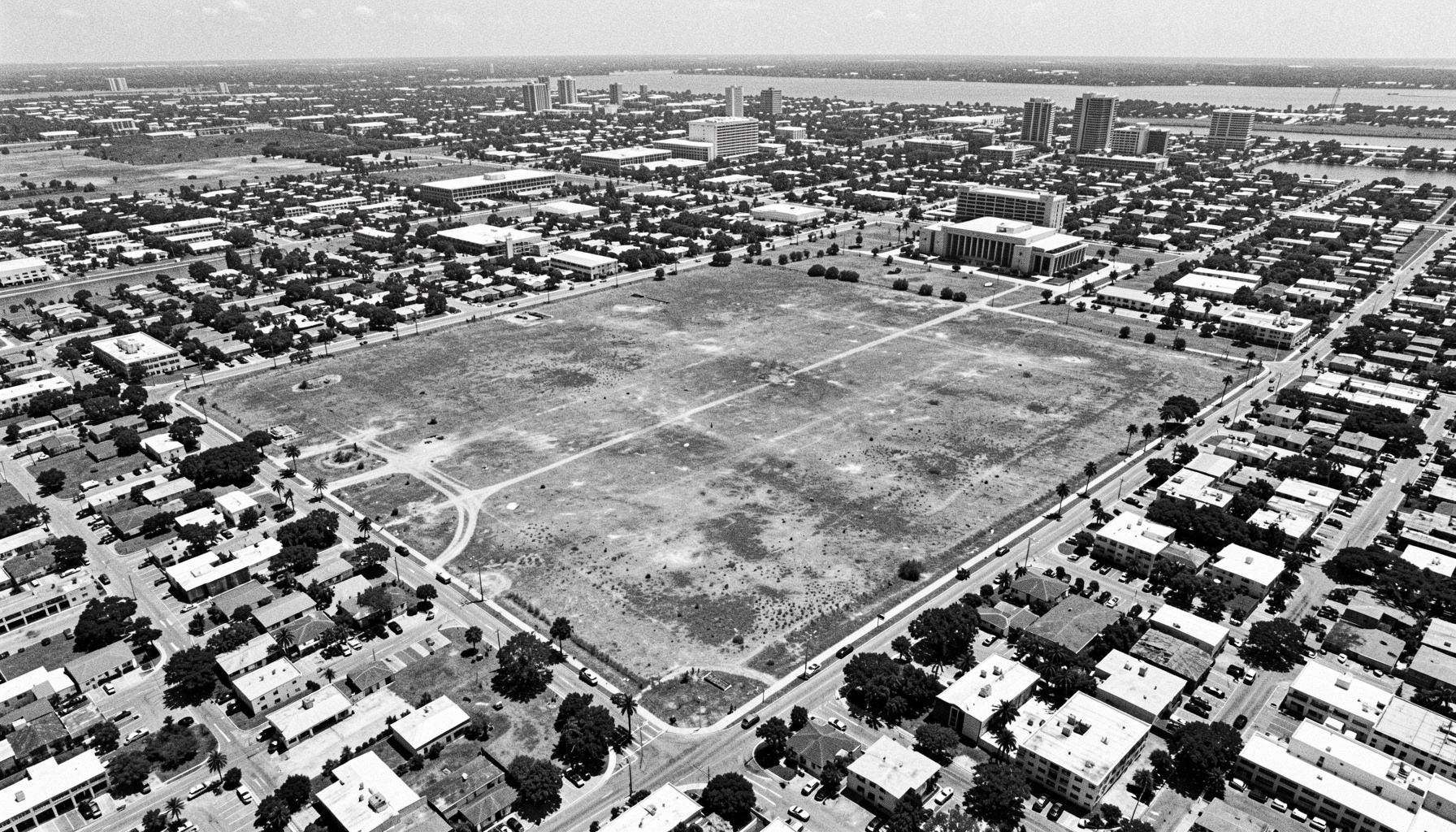

The parcel in question sits in Miami-Dade County. The State of Florida, under Governor Ron DeSantis, agreed to hand it over at no charge for use as a presidential library and museum bearing the name of Donald J. Trump. No competitive bid. No purchase price on record. Public land, gone.
The plaintiffs are Miami residents. They filed in the United States District Court for the Southern District of Florida. Their core claim is not complicated: Article VII, Section 10 of the Florida Constitution bars the state from making gifts of public property to private individuals or organizations. A library bearing one man's name, housing one man's papers, celebrating one man's tenure, is not a public utility. It is a monument. The distinction matters to the framers of that constitution. It apparently did not matter to Tallahassee.
Presidential libraries have a history of this kind of arrangement. The federal government, through the National Archives, takes custody of the records. Private foundations raise the money, build the buildings, and run the museums attached to them. That split structure has always carried a quiet tension: public documents, private branding, donor lists that do not always surface. The land underneath the whole arrangement is where the tension goes loudest.
Florida statute 253.034 governs the disposition of state-owned lands. It requires that surplus land be sold at appraised value, or retained for public use, or transferred to another government entity. A transfer to a private library foundation fits none of those categories cleanly. The plaintiffs say it fits none of them at all.
Governor DeSantis signed the enabling legislation. The bill passed the Florida Legislature along party lines. The land's appraised value has not been reported in figures made public as of the filing date. That number, whatever it is, is the one that would settle the argument about whether this is a gift or a transaction. Nobody in Tallahassee has volunteered it.
There is a principle older than Florida statehood that says a government officer holds public property in trust, not in title. You do not give away what is not yours to give. The residents suing in Miami's federal courthouse did not invent that principle. They are simply asking a judge to apply it to 2025, to this parcel, to this deal, signed by these men, for this building.
The deed is dated. The land does not move. The lawsuit is filed.