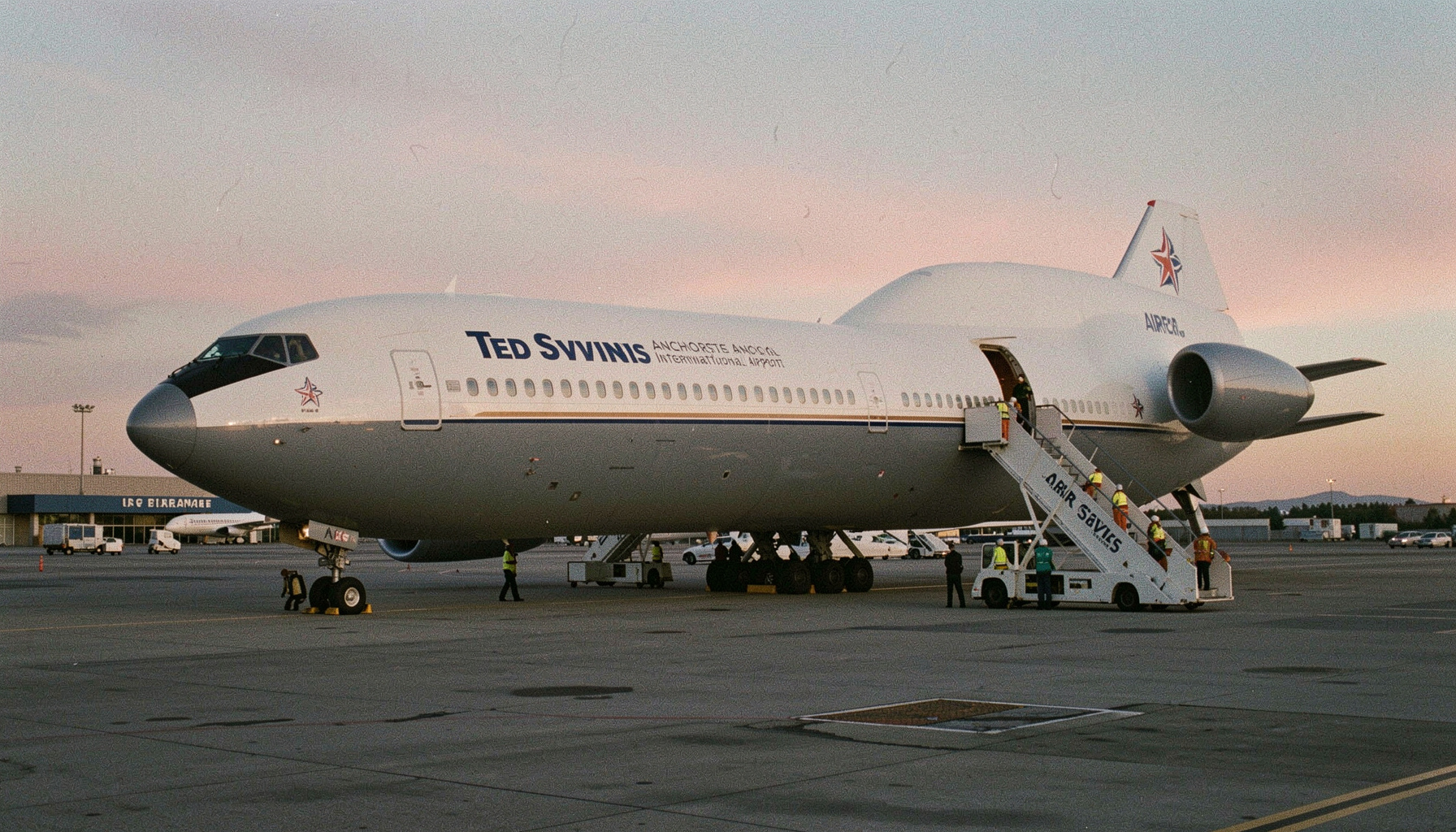
It was the kind of reversal that Washington rarely bothers to explain and Silicon Valley rarely forgets. On Tuesday, President Trump extended a personal invitation to Nvidia CEO Jensen Huang to join him on a high-profile trip to China. By Wednesday evening, Huang was on the tarmac in Anchorage, boarding Air Force One during a refueling stop.
The turnaround came after weeks of coverage noting Huang's absence from earlier White House tech gatherings — a snub, or at minimum an omission, that generated its own news cycle. For a company whose chips sit at the center of the global AI arms race, the optics of being left off the guest list were hard to ignore. The coverage, it appears, was not.
Nvidia has spent much of the past two years navigating a complicated relationship with U.S. trade policy. Export restrictions on its high-end AI processors — most prominently the H100 and its successors — have limited the company's access to the Chinese market at precisely the moment when demand there has been enormous. Huang has been publicly measured on the restrictions, calling them, in paraphrased remarks across multiple interviews in 2024 and 2025, a policy that risked pushing Chinese customers toward domestic alternatives.
Whether the Anchorage boarding moment signals a thaw in that broader tension, or simply a well-timed photo opportunity ahead of trade negotiations, is not yet clear. What is clear is that the CEO of the world's most valuable chipmaker is now somewhere over the Pacific on the president's plane. The meetings in China have not yet been formally detailed by the White House.