
The number is one trillion dollars. Write it out: $1,000,000,000,000. That is not a negotiating position. That is a siege engine dressed in a wire transfer.
The Hill reported in July 2025 that the Trump administration was examining a framework under which Chinese investment of that magnitude would flow into the United States in exchange for rolling back restrictions put in place, across multiple administrations, specifically because Chinese capital in certain sectors is a national-security problem. The restrictions exist because the problem was documented, named, and acted upon. The proposed deal would trade those restrictions away for the money.
Representative Marjorie Taylor Greene, who has cheered nearly every move this administration has made, called the reports deeply concerning. Laura Ingraham, whose Fox News program has served as something close to an administration bulletin board, said she was alarmed. When those two voices are the loudest ones saying wait a moment, the moment deserves more than waiting.
Consider what the restrictions in question actually govern. Foreign investment reviews under the Committee on Foreign Investment in the United States — CFIUS — exist to block or condition deals where a foreign government, through a company it controls or influences, could acquire meaningful access to American technology, infrastructure, or data. China is not a private-sector actor that happens to have a large economy. The Chinese Communist Party maintains formal mechanisms for directing private companies toward state intelligence objectives. This is not a think-tank assertion. It is written into Chinese law — the 2017 National Intelligence Law — which requires organizations and citizens to “support, assist, and cooperate with national intelligence work.”
So the framework being discussed is, in plain terms, this: in exchange for a very large number, the United States would lower the fence it built to keep a documented threat from reaching its most sensitive assets. The dealmaker's logic is that the number is large enough to make the fence negotiable.
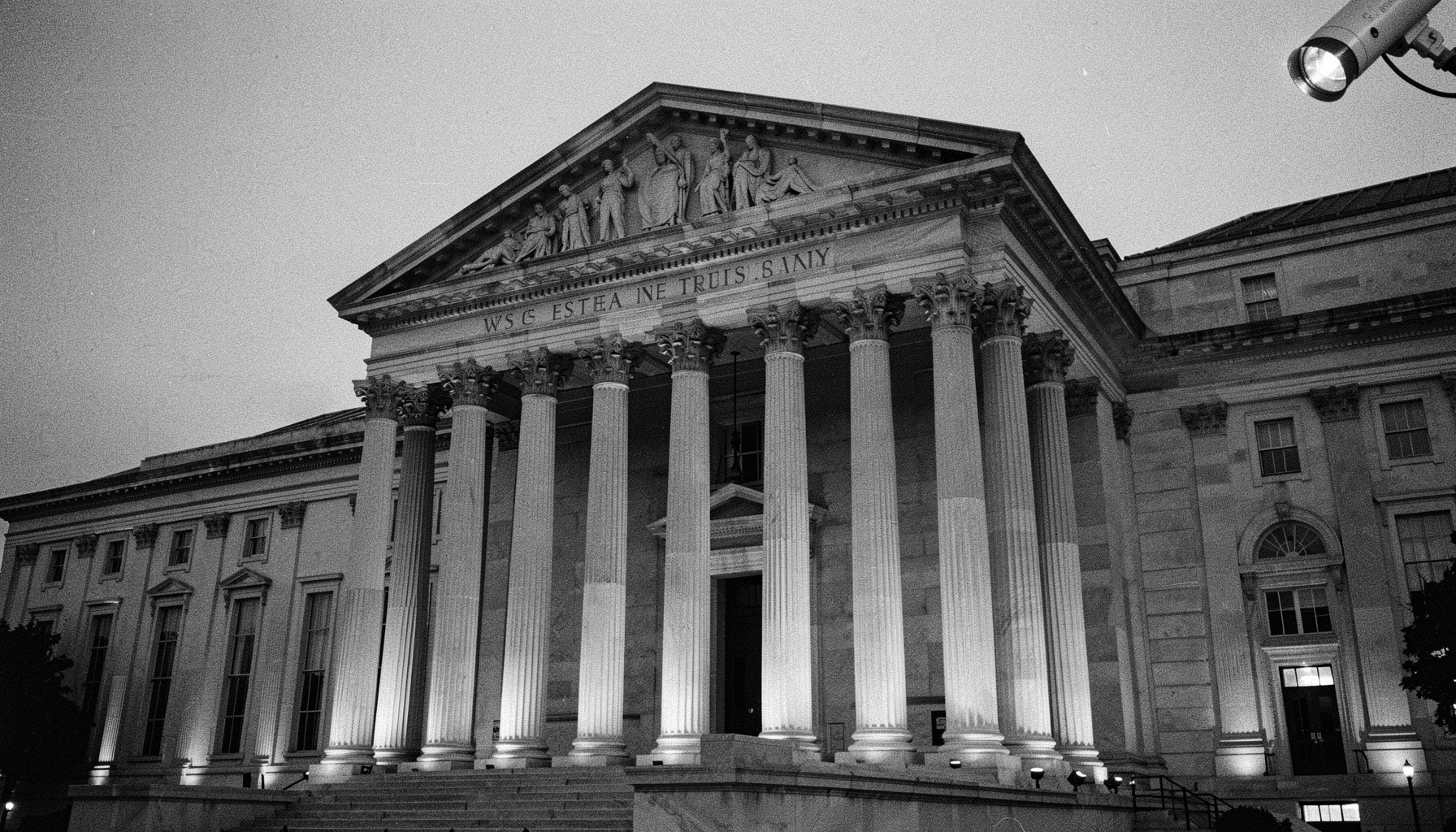
There is a courthouse in every American city where you can watch people learn, too late, that fences are cheaper than the thing they were built to protect.
Greene and Ingraham are alarmed for reasons that may be entirely their own, tribal and procedural and personal. Their reasons are not the point. The point is that a trillion dollars is precisely the size of number that has historically made serious people stop asking what it costs. The serious question is not what China is offering. It is what the offer is for.
The CFIUS filing for a semiconductor fab in Arizona runs about 200 pages. The paperwork for a trillion-dollar détente with Beijing, apparently, fits on the back of a handshake.