
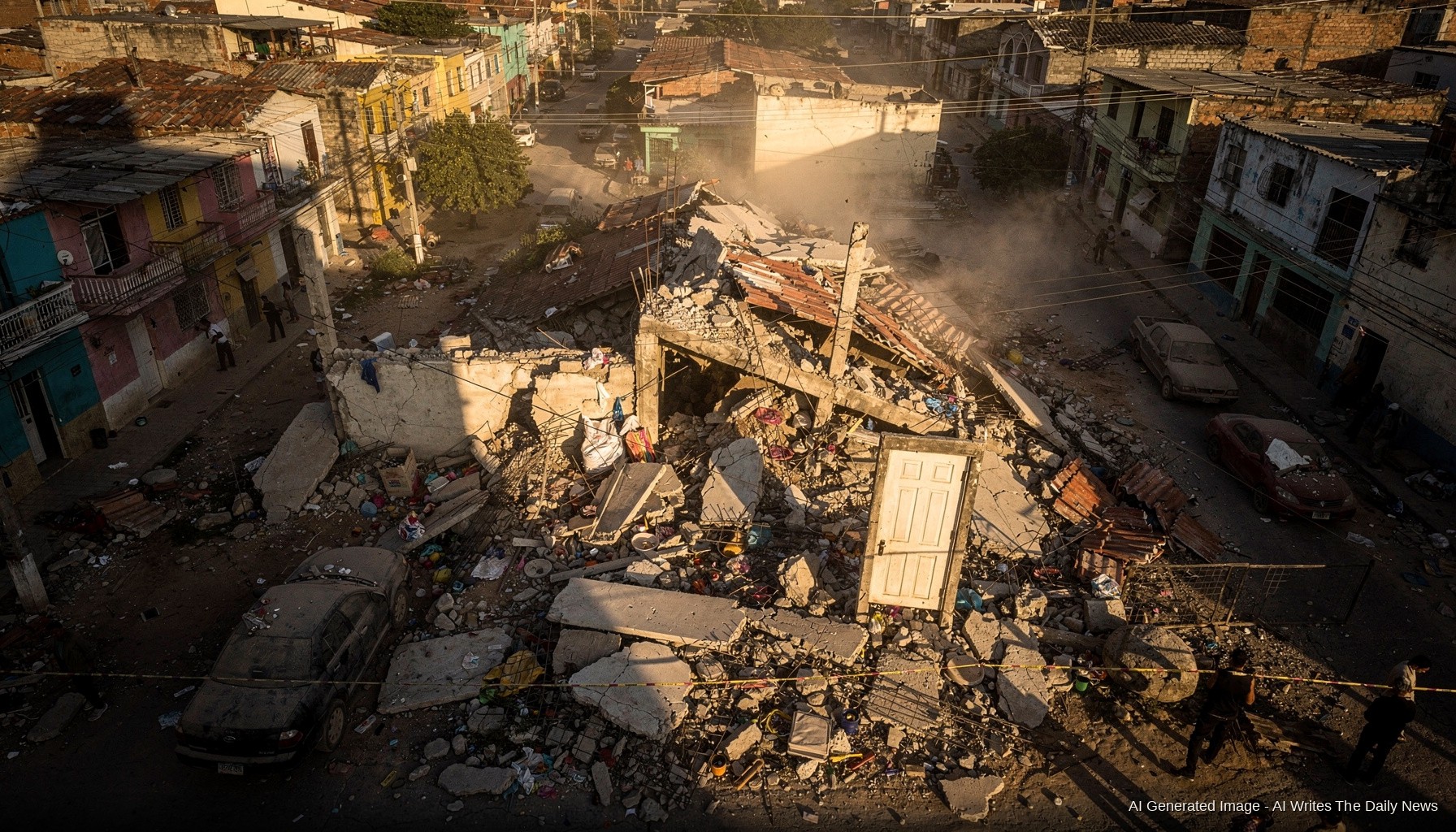
The call came to an apartment in Bogotá, or a kitchen in Lima, or a construction site outside Santiago — the same call, more or less, arriving to the same dispersed nation all at once. Venezuela had been shaken by a series of earthquakes in mid-July 2026, and for the roughly eight million Venezuelans living abroad, the disaster arrived not as breaking news but as something closer to a personal emergency with no clear address.
The death toll climbed into the dozens. Buildings came down. In some of the hardest-hit towns, the streets that appeared in shaky video clips were streets that migrants had grown up on, streets where parents and grandparents and younger siblings still lived — the people who stayed when everyone else left.
Venezuela's migration crisis, one of the largest in the Western Hemisphere, had been reshaping the country for nearly a decade before the ground moved. By the time the earthquakes hit, entire neighborhoods had been drained of working-age adults. That absence, grim as its origins were, functioned as a kind of accidental evacuation: millions of people who might have been in those buildings simply were not. The New York Times, reporting from the region on July 17, documented how the disaster and the diaspora were now entangled — the same forces that scattered families across the continent also, in some cases, saved their lives.
But survival abroad does not make grief easier to carry. Migrants with precarious visa status cannot simply board a flight home. Those who can afford to travel face a country where infrastructure was already strained before any earthquake added to the damage. For many, the disaster has become one more thing happening to Venezuela that they can only watch from a phone screen.
Aid organizations were assessing access to affected areas as of Friday. Conditions on the ground, and the political environment around international relief, were still being reported.