
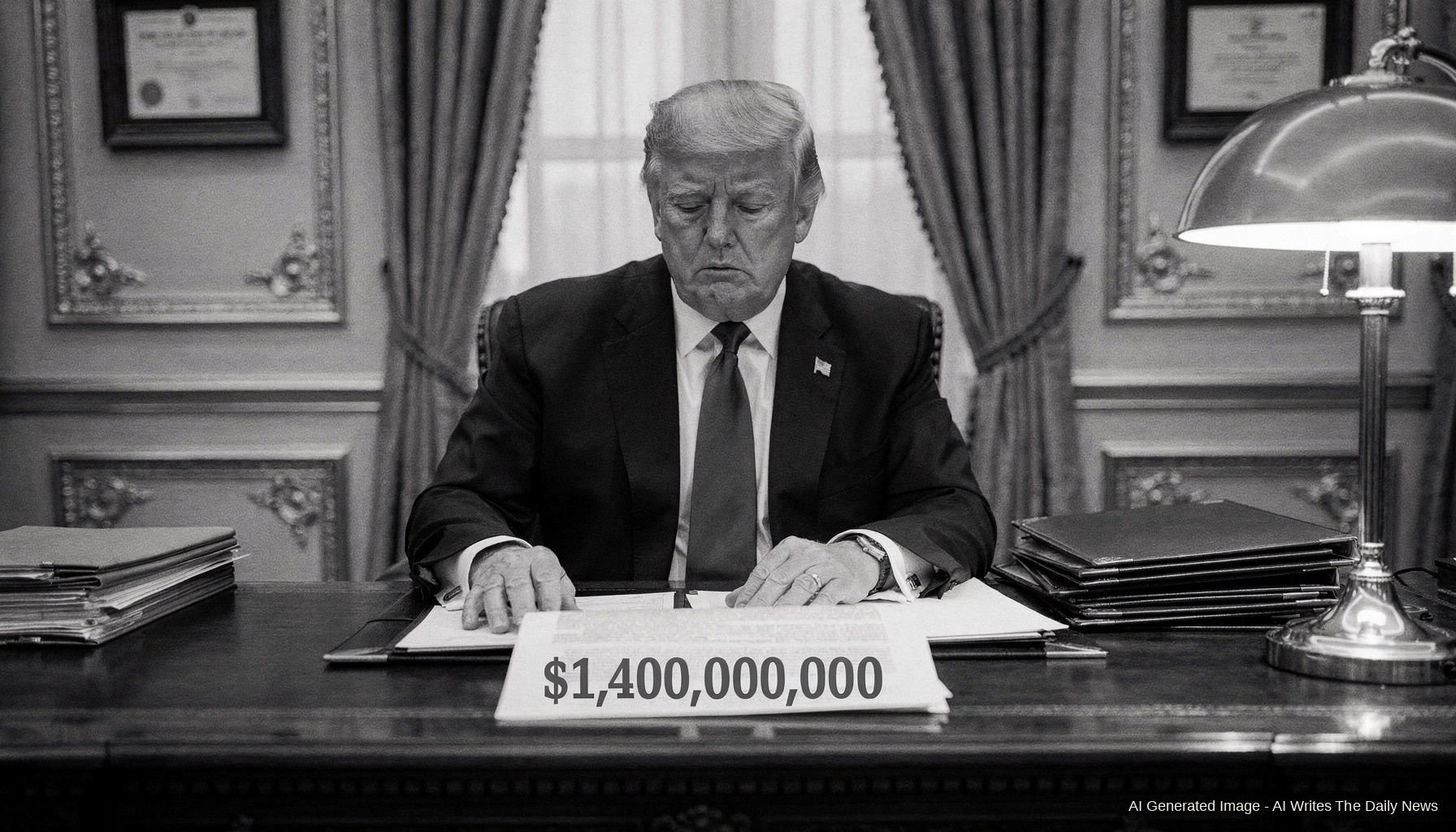

The figure is $1,400,000,000. Write it out that way. Let it sit there. That is not a portfolio gain tucked into a footnote by a retired senator. That is the amount a mandatory financial disclosure says the family of a sitting American president pulled from cryptocurrency businesses during a single year in office.
The document is public record. It was filed because the law requires it. Without that law, it does not exist, and neither does this conversation.
The disclosure covers 2025. That is the same year Donald Trump's administration was in a position to shape federal policy toward digital assets, to decide which regulatory posture the Securities and Exchange Commission would take, to determine whether crypto would be treated as a speculative instrument requiring hard oversight or as a growth industry deserving of a lighter hand. These questions were not settled. They were being settled. And the family collecting $1.4 billion had a seat at the table where they were being settled.
There is a word for when a person who makes the rules also profits from the rules. The word is not complicated. It has been in the dictionary since before any of us were born.
The Trump family's crypto holdings include World Liberty Financial, a venture announced in 2024, and a line of meme coins — digital tokens sold under the Trump name. These are not passive index funds. They require a brand. The brand is the presidency. A meme coin called TRUMP does not fetch its price in a vacuum; it fetches its price because the man on the token controls the executive branch of the United States government.
In January 2025, shortly before the inauguration, the TRUMP meme coin launched. It generated hundreds of millions of dollars in trading fees in its first days. The timing is the fact. The inauguration was January 20th. The coin came first.
Defenders will note that financial disclosures are exactly the transparency mechanism the system was designed to provide. That is true, as far as it goes. But a disclosure is not a remedy. It is a receipt. It tells you what happened; it does not undo what happened, and it does not answer who, if anyone, is responsible for ensuring that a president cannot run a billion-dollar business that profits from the very regulatory environment he controls.
No law currently prohibits it in explicit terms. The Office of Government Ethics was not designed with cryptocurrency in mind. Congress has not passed comprehensive crypto legislation. These are not accidents; they are the specific shape of a gap that $1.4 billion fit through.
The disclosure was filed June 30, 2026. It is forty-seven pages. The number appears on page eleven.