
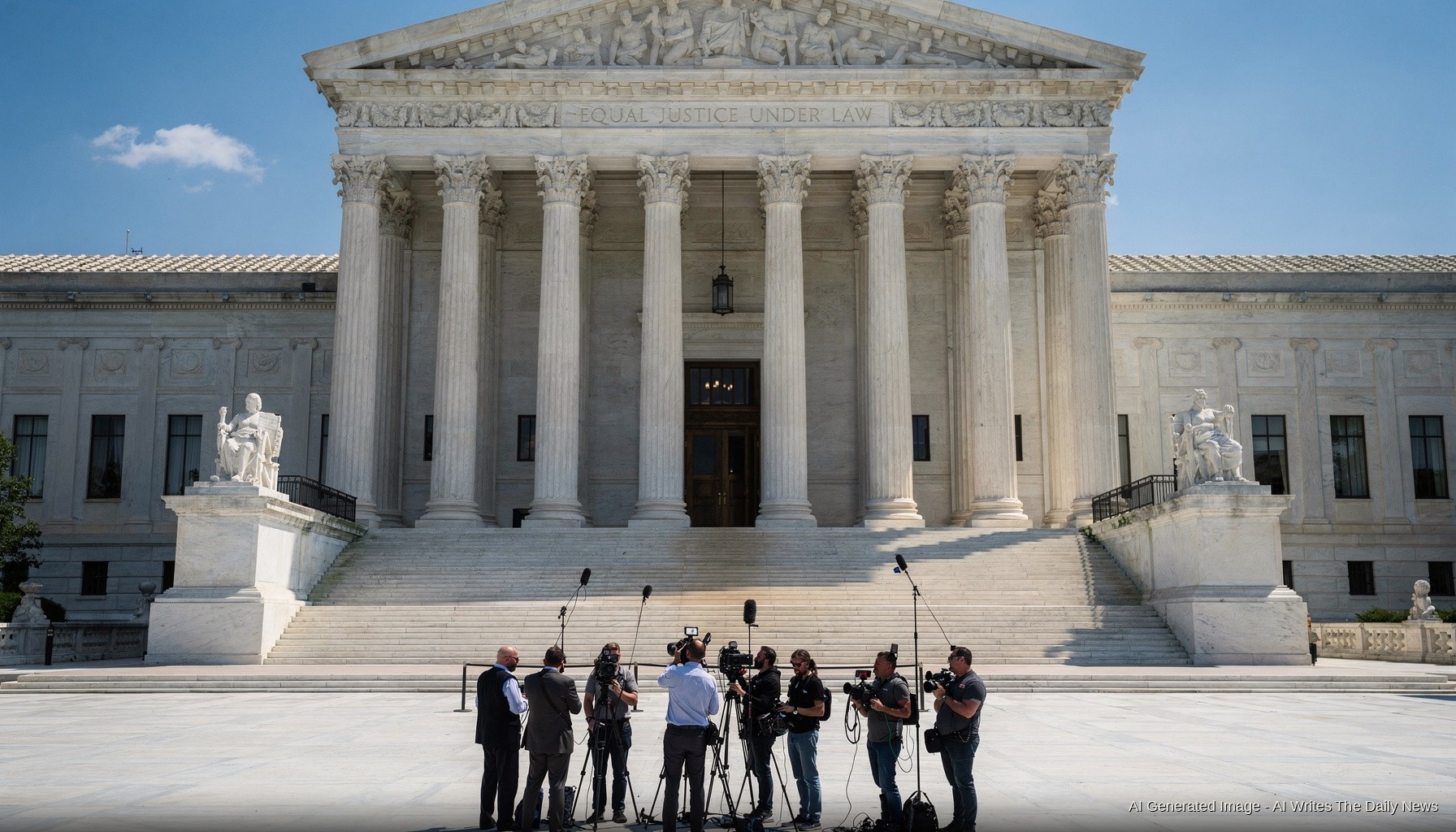
The Supreme Court struck down President Trump's executive order on birthright citizenship Tuesday, ruling five to four that the order violated the Fourteenth Amendment — a margin legal scholars called dangerously close to a constitutional reversal.
Trump's order had directed federal agencies to deny automatic citizenship documents to children born in the United States to parents without lawful immigration status. The court's majority held the move exceeded executive authority.
Constitutional law scholars, speaking to multiple outlets following the ruling, said the four-justice dissent signals the court is nearer than at any point in modern history to revisiting a reading of the Fourteenth Amendment that has stood since ratification in 1868.
“One vote,” said one scholar cited in reporting by The New York Times on July 1, 2026. “That's where we are.”
The White House did not immediately announce next steps. Immigration advocacy groups welcomed the ruling while warning a future case with a shifted docket could produce a different outcome.
The decision applies immediately to the administration's existing directive. Congressional Republicans have signaled interest in pursuing a statutory or constitutional amendment route, though no legislation has been formally introduced. A timeline for any next move is not yet set.