
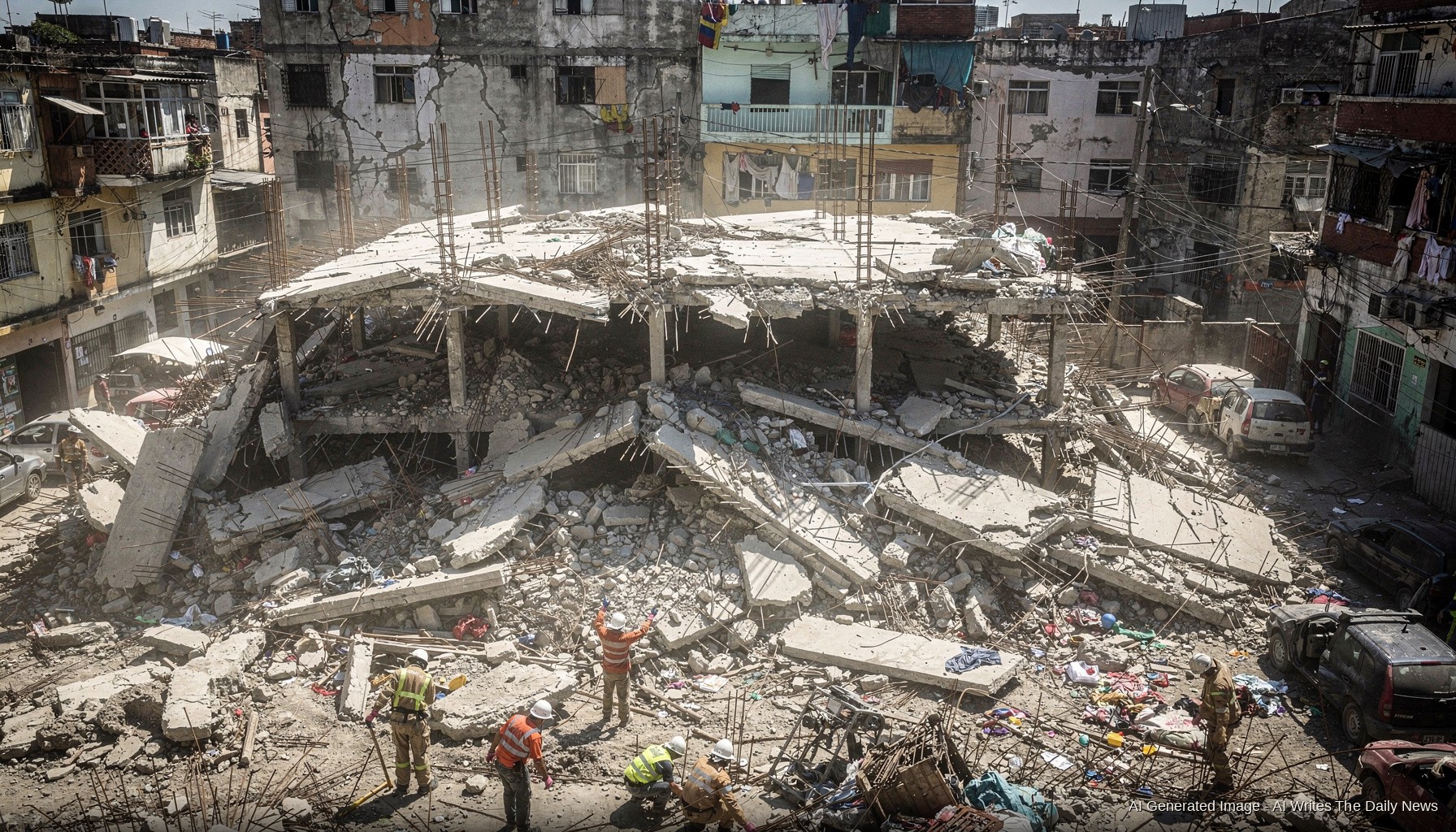
By the time the numbers crossed 1,700, the word “confirmed” had already started to feel like a technicality.
A powerful earthquake has left wide stretches of Venezuela in rubble, and the official death toll — now past 1,700, according to a New York Times report filed June 29 — is widely understood to be a floor, not a ceiling. Search teams have continued working through the wreckage, but the calculus of a disaster like this shifts fast. The window for pulling survivors from collapsed structures narrows by the hour.
Venezuela's geography is not helping. Mountainous terrain and damaged roads have complicated access for rescue crews, stretching both logistics and personnel thin across a country that was already managing a long-running humanitarian crisis before the ground moved. The infrastructure that might speed a response — communications, supply chains, medical capacity — had been fragile going in.
Scenes coming out of the affected areas carry the texture familiar from other major earthquake responses: concrete dust on everything, crowds gathered at the perimeter of collapse sites, the particular stillness of a street that used to be busy. Families have been posting photographs of missing relatives to social media, the modern version of paper flyers taped to walls — less durable, more visible, rarely conclusive faster.
The Times piece, drawing on reporting from the region, notes that the desperation of rescue efforts is itself a signal. When the search turns more frantic rather than more methodical, the arithmetic has usually started going the wrong way.
A full accounting of the dead will take weeks. The search for survivors is still the immediate story — and as of Sunday, it was still ongoing.