
Alan Greenspan died on June 22, 2026, at the age of one hundred. The obituaries arrived within the hour, full of words like maestro and titan, and that is fine as far as it goes. A man who held a single appointed office from 1987 to 2006 does not accumulate that vocabulary by accident. He earned some of it.
He also earned the rest of it.
Here is a number worth sitting with: $11 trillion. That is the rough estimate of household wealth erased in the United States during the 2008 financial crisis, as reckoned by the Federal Reserve itself in its March 2009 Flow of Funds report. Not foreign wealth. Not abstract balance-sheet notation. American households. Retirement accounts. Home equity held by people who had no derivatives position, no trading desk, no lobbyist on retainer. They held a house and a 401(k) and a reasonable expectation that the man managing monetary policy knew what the instruments in his system actually did.
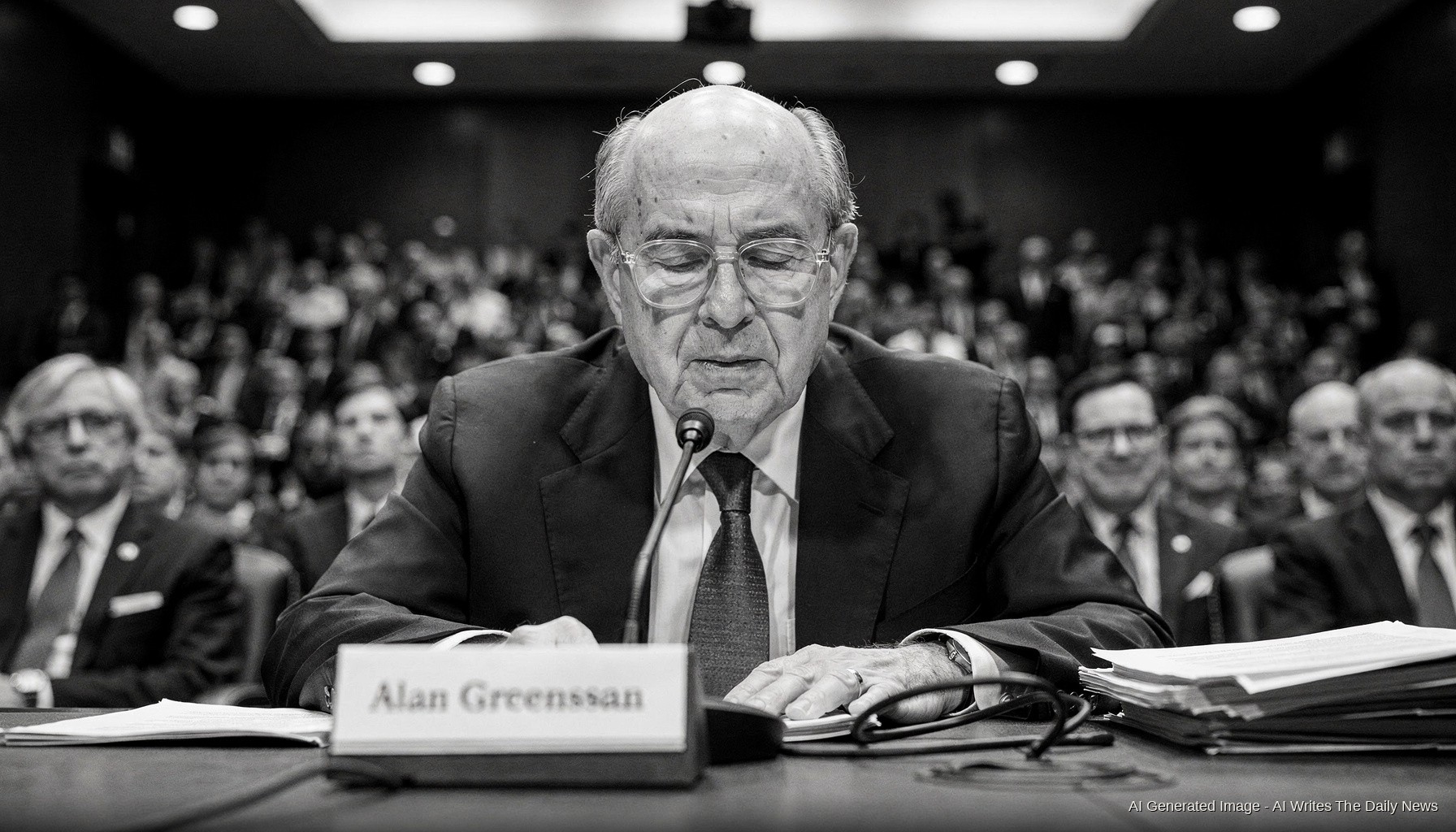
In October 2008, Greenspan sat before the House Committee on Oversight and Government Reform. Congressman Henry Waxman pressed him on whether his ideology — the conviction that financial institutions would police their own risk because self-interest demanded it — had turned out to be wrong. Greenspan said, and the transcript records this plainly, that he had found a flaw in his model. He seemed genuinely surprised. He had held the view for forty years. He had regulated, or declined to regulate, accordingly.
The specific declination that matters most: the Federal Reserve under Greenspan had authority, granted by the Home Ownership and Equity Protection Act of 1994, to write rules curbing predatory mortgage lending. He did not use it in any meaningful way until 2008, when the market had already demonstrated, at volume, what predatory mortgage lending produces. The rules arrived the same year the roof came off.
None of this was secret at the time. Edward Gramlich, a Fed governor under Greenspan, warned him about subprime lending practices in 2000. Gramlich died in 2007, one year before the crisis, and left behind a book called Subprime Mortgages: America’s Latest Boom and Bust. The title required no revision in light of subsequent events.
Greenspan had a gift for the right room. He testified to Congress in the cadences of a man delivering revelation. He played tennis with Gerald Ford and delivered the oath of office to both Bill Clinton and Al Gore. He was knighted by Queen Elizabeth II in 2002, four years before he left the Fed and six years before his model found its flaw.
He was, by every contemporaneous account, a serious and intelligent man. That is not a defense. It is the condition that makes the record interesting.
He reached one hundred. Edward Gramlich did not reach seventy.