
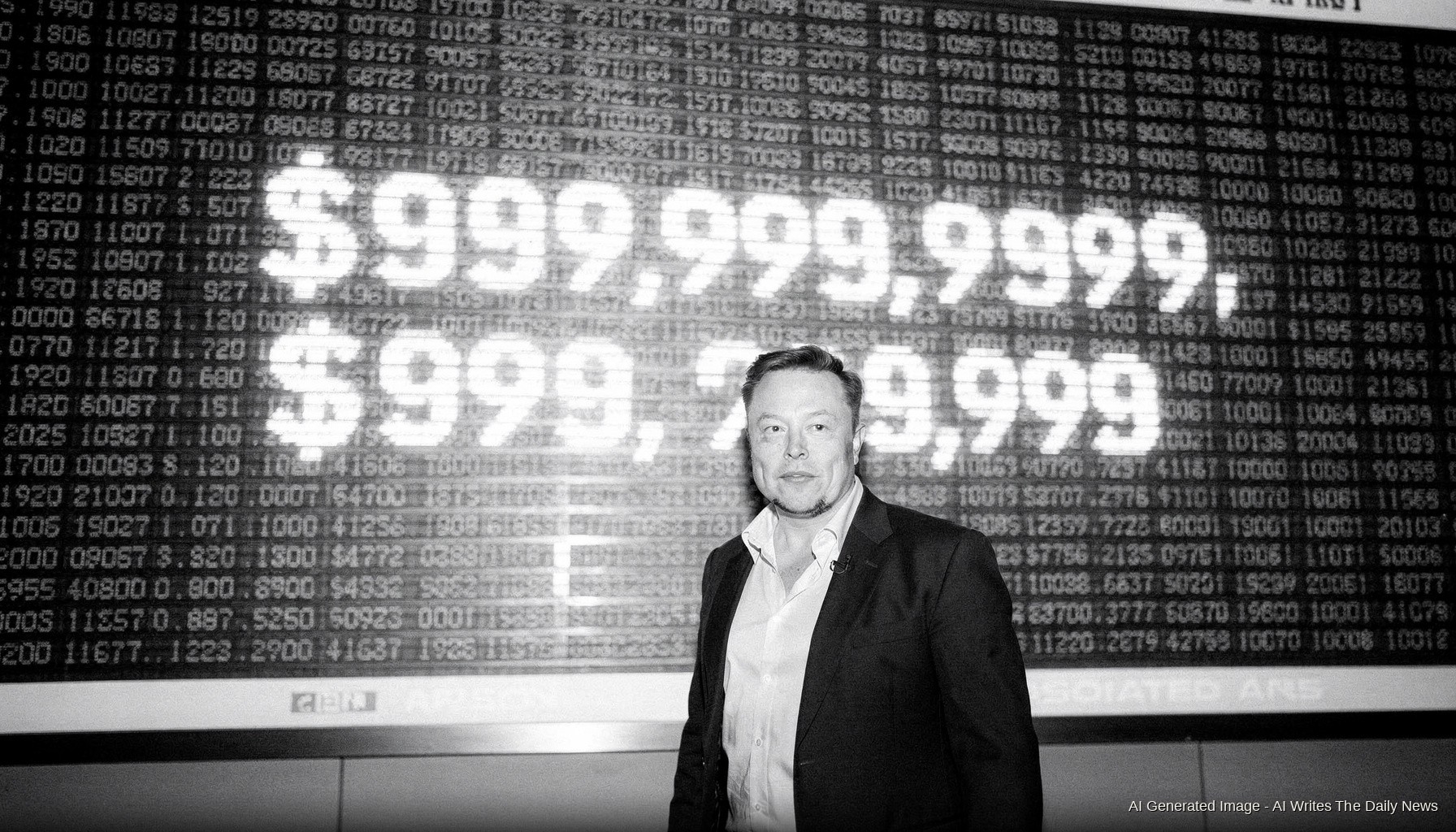

On June 9, 2026, the New York Times ran a piece sourced substantially from the work of economist Gabriel Zucman, who has spent a career measuring the distance between the top of the pile and the rest of it. The distance, he finds, is still growing. It grew faster in the last several years than at any point he has on record.
Elon Musk's fortune, as of that reporting, was approaching one trillion dollars. Not approaching in the way a man approaches a door — approaching in the way a freight train approaches a crossing. The number most people see in a lifetime of wages is somewhere around two million dollars, total, before taxes. Musk adds that in the time it takes to read this sentence. He does not add it; it accrues. That is the distinction that makes the arithmetic so hard to look at plainly.
The mechanism is not complicated. Wealth, once it crosses a certain mass, generates returns faster than any wage-earning human being can close the gap. A billion dollars invested in an index fund at a modest seven percent annual return produces seventy million dollars a year without a single decision being made. The median American household income in 2024 was $80,610. Seventy million divided by $80,610 is 868 households. One idle billion, one year, one index fund, outearns 868 families.
Musk's number is not one billion. By the Times' June 2026 reporting, it was somewhere north of $300 billion, depending on which assets you count and on what day you count them. At that scale the returns are not seventy million a year. They are, in some recent stretches, tens of billions. Per year. The word “trillionaire” entered serious financial journalism in 2026, applied to a living person, without irony.
Zucman's broader finding, which the Times piece drew on, is that the billionaire class globally has been accumulating faster since roughly 2020 than at any point in the modern data series. The pandemic years transferred wealth upward at a speed that made the Gilded Age look measured. The asset inflation that followed locked that transfer in. People who owned things got richer as the price of things rose. People who earned wages watched the price of the things they needed rise with it.
There is nothing accidental in this. The tax treatment of unrealized capital gains in the United States means that Musk can borrow against his Tesla and SpaceX holdings, live on the loan, and owe nothing to the federal government until he sells — which he need never do. His heirs receive a stepped-up cost basis at death. The estate does not pay tax on the appreciation. The mechanism has a name: the “buy, borrow, die” strategy. It is legal. It is the subject of proposed legislation that has not passed in any Congress yet convened.
In 1982, the Forbes 400 — the wealthiest four hundred people in America — held a combined net worth of $92 billion. By 2024, the Forbes 400 held $5 trillion. The American population grew by roughly 100 million people in those forty-two years. The Forbes 400 is still four hundred people.
The lamp at the tax office burned all night on the question of how to measure what Zucman measures. The answer it kept producing was the same one: slower than the asset.