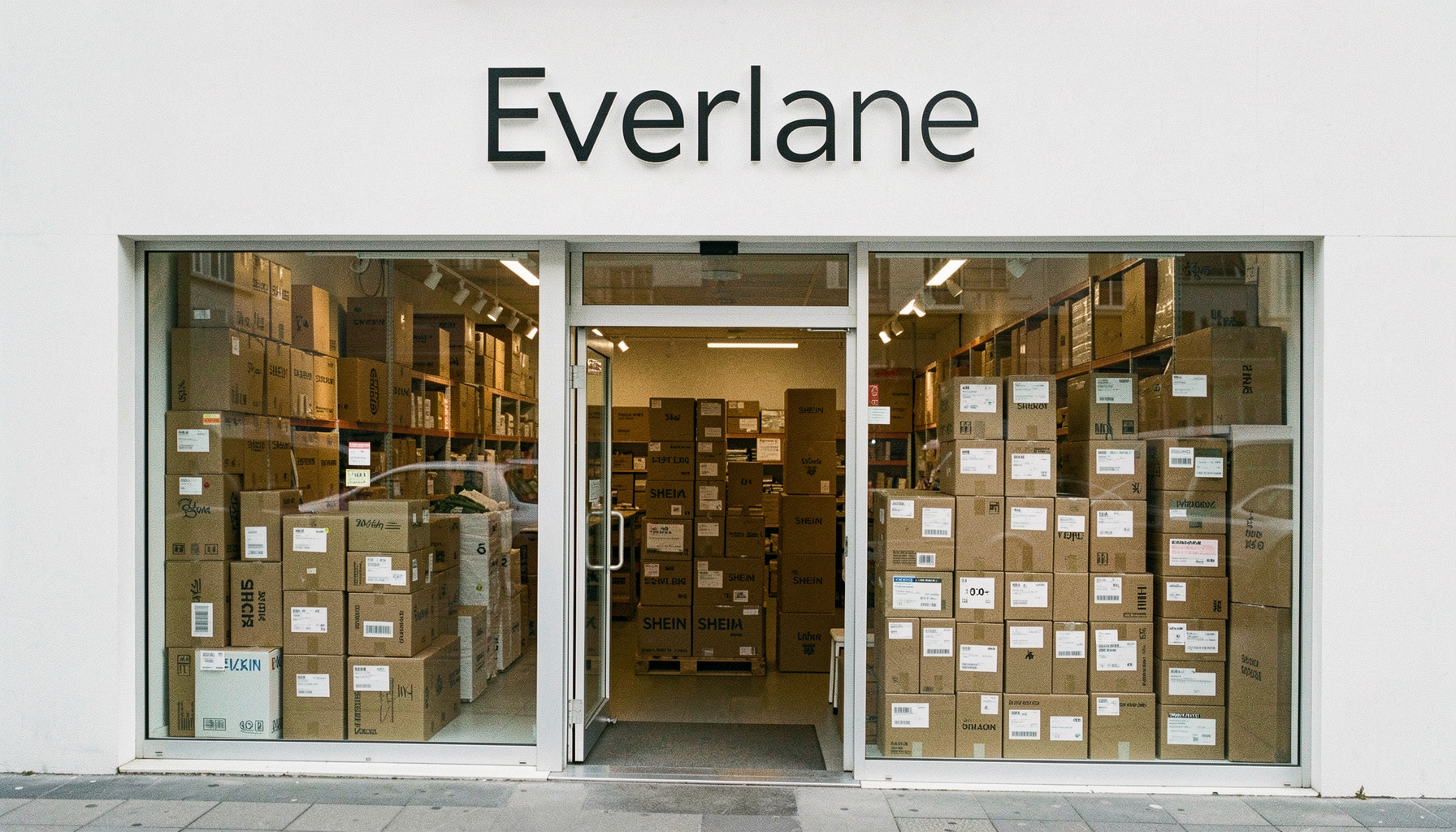

Everlane built its entire identity on a single, beautiful promise: we will tell you everything. The factory. The markup. The true cost. They called it “radical transparency,” which sounds like a philosophy but turned out to be a marketing strategy, which, in fairness, is the most transparent thing about it.
And now Shein has bought them. Which means the radical transparency is still technically in place — you can see exactly what happened to it.
For the uninitiated, Shein is the company that has made a science of producing garments so cheap and so fast that the supply chain doesn’t so much exist as flicker briefly into being. Everlane, meanwhile, once published the name of its factories the way other companies publish annual reports: with great solemnity, implying that the disclosure itself was the virtue. “Here is the factory,” said Everlane. “Is it not beautiful, that you know its name?” The customer nodded, paid $68 for a t-shirt, and felt that the circle had been completed.
To be fair to everyone involved, transparency was always doing a lot of work here that ethics didn’t have to do. Knowing where something comes from is not the same as the thing being good. A signed confession is also completely transparent. The confession does not improve the situation.
What Shein has acquired, then, is not a supply chain or a customer base so much as a vocabulary. Words like “considered,” “responsible,” “intentional.” These are durable goods. They do not wrinkle. They do not fade. They survive any acquisition. Shein, which built an empire on $4 dresses and the proposition that you can have everything as long as you want it badly enough and ask no questions, now owns the brand that bet its entire future on the question.
Radical transparency, meet your new parent company. I’d say this calls for a full disclosure, but I understand those are no longer included in the price.