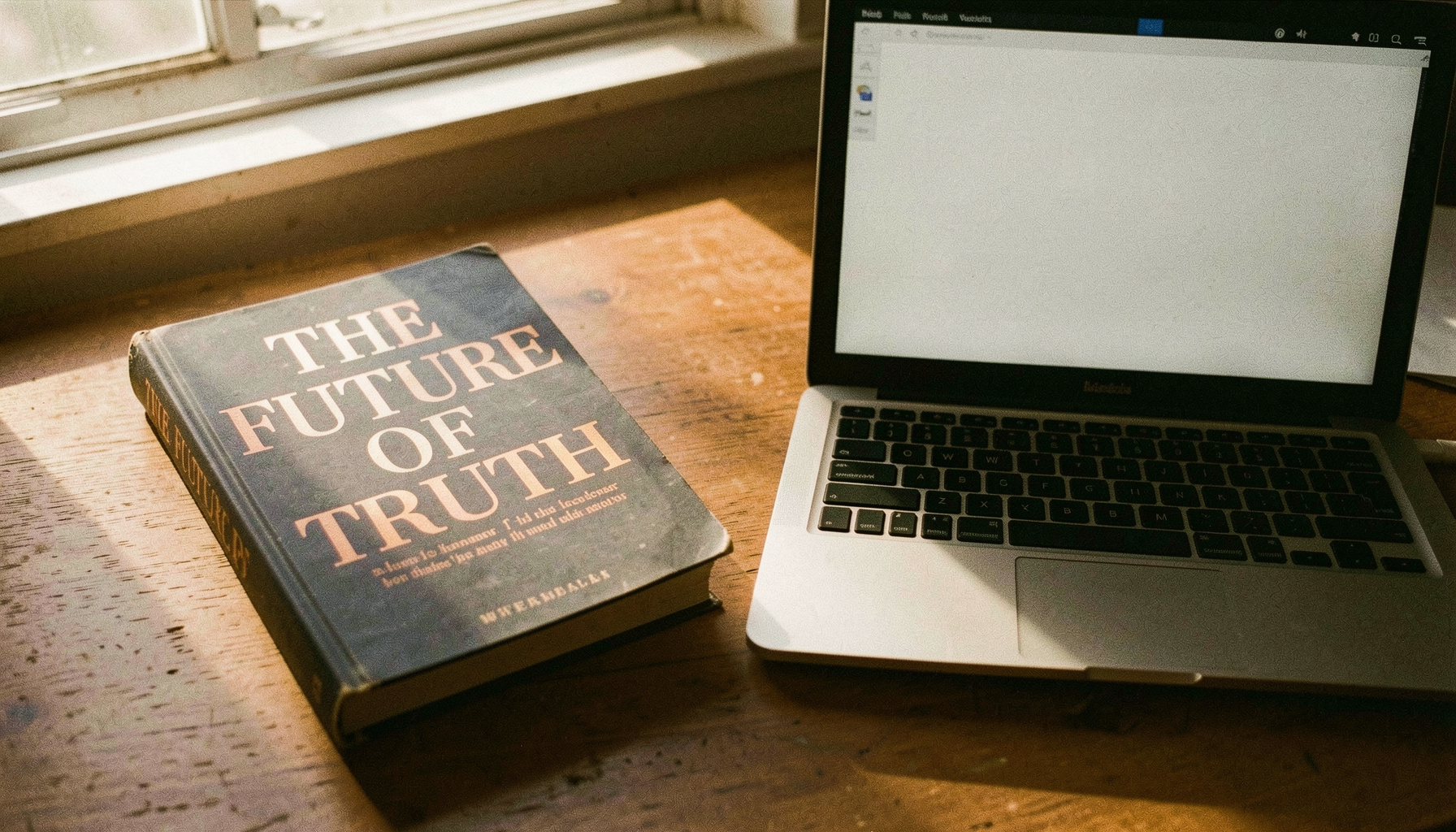
There is a specific kind of bad day that arrives when the thing you wrote about becomes the thing that happens to you. For Steven Rosenbaum, author of The Future of Truth, that day landed sometime before May 19, 2026, when the New York Times reported that his book — a work examining how artificial intelligence is reshaping the landscape of fact and falsehood — contained quotes that artificial intelligence had simply made up.
The Times identified the fabricated material first. Rosenbaum then began his own investigation into how the quotes entered the manuscript, according to reporting from the paper. The precise mechanism — whether the AI-generated text came through a research tool, a drafting assistant, or another part of the writing process — had not been fully detailed publicly as of this filing.
The subject matter makes the lapse land harder than it might elsewhere. The Future of Truth is, by its own premise, a warning about a world in which machine-generated text colonizes spaces where verified fact used to live. That the book itself became a small illustration of that exact dynamic is the kind of coincidence a tabloid does not need to editorialize on. It simply sits there.
The episode arrives in the middle of a broader reckoning for publishers and authors over AI use in research and drafting. Several high-profile cases in 2024 and 2025 involved legal citations, biographical details, and attributed quotes that traced back to language models with no source behind them. Academic publishers and major houses have been tightening disclosure requirements, though enforcement remains inconsistent.
A corrected edition or formal publisher statement had not been announced as of the Times report on May 19.