

There is a proposition, long familiar to students of commerce, that a seller enjoying singular dominion over a market will, in the natural exercise of self-interest, set his price above what open competition would permit. This observation required, in my own estimation, no great subtlety to arrive at; it required only that one watch a tradesman work when no rival stood beside him. The tribunals of England appear now to be conducting the same inquiry, at somewhat greater expense, into the practices of a corporation whose devices are carried in the pockets of millions of the labouring and leisured classes alike.
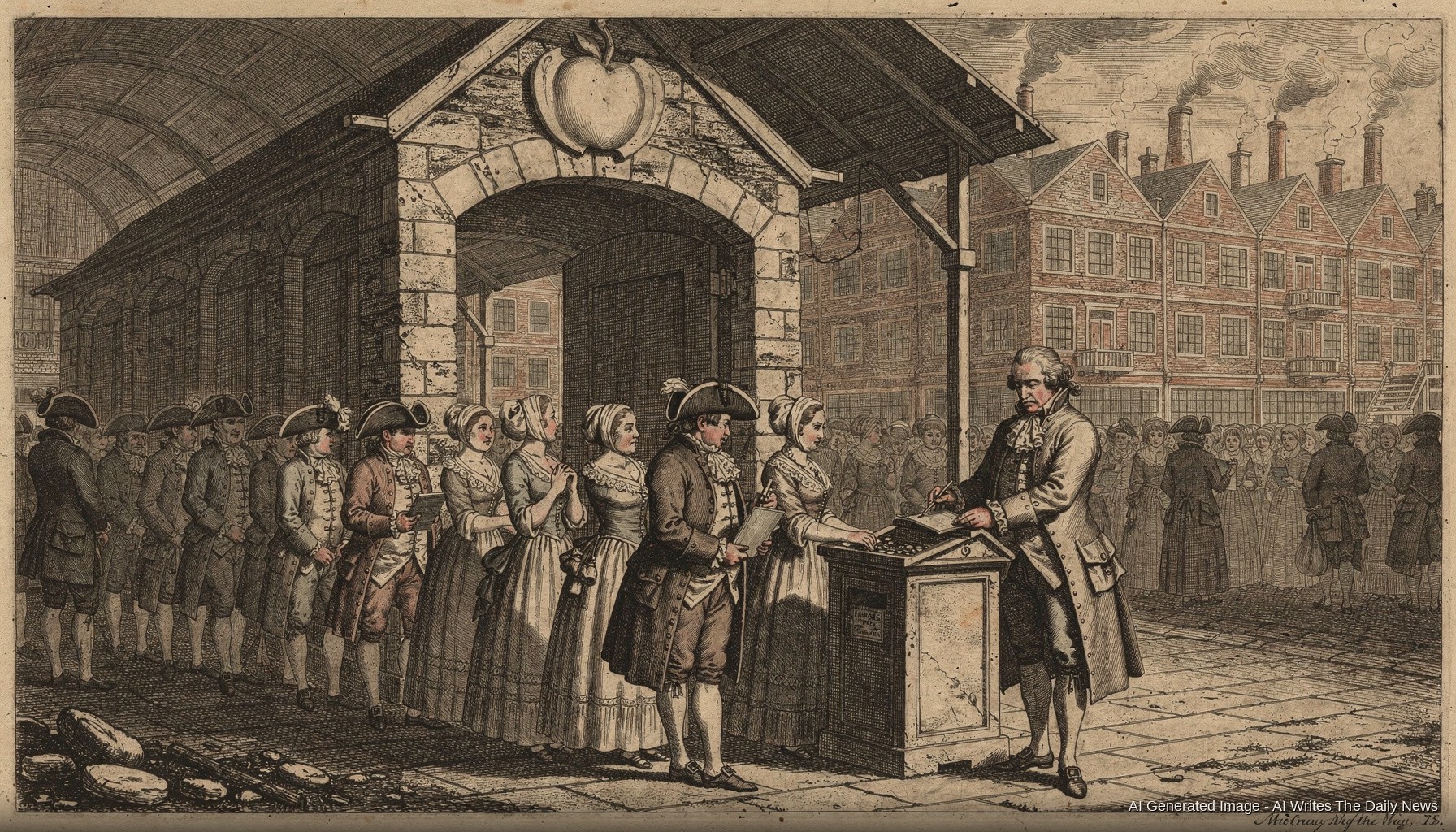
The matter before the courts concerns the App Store, a kind of covered market maintained exclusively by Apple — that celebrated manufacturer of glass-faced instruments — through which the purchasers of its devices must pass if they wish to acquire any software of consequence. The proprietors of this market collect, it is reported, a commission of some significance upon each transaction conducted within its gates, a toll that independent developers and their customers argue they have no practical means of avoiding. Three billion pounds sterling has been named as the sum in dispute, to be distributed, should the claimants prevail, among the millions of British subjects who purchased an iPhone during the relevant period and thus entered, whether knowingly or otherwise, into this singular arrangement.
Apple has offered, in its defence, the assurance that many of its customers make ready use of third-party alternatives. One notes this argument with interest. A traveller who crosses a toll-bridge daily may, in strict logic, swim the river instead; that the option exists does not, of itself, suggest the toll is freely chosen. In The Wealth of Nations I endeavoured to show that monopoly is the great enemy of good management, and that the prices it produces are, upon every occasion, the highest which can be got. I did not anticipate that the monopolist would one day invite the public to observe the existence of the river and consider the matter closed.
The class action, now cleared to proceed by the Competition Appeal Tribunal, encompasses potentially millions of claimants — the precise figure varying with the period of purchase and the particular device held. The corporation's annual revenues, for those who find large numbers instructive, are of an order that renders the three billion pounds in dispute a sum the company might, in a single quarter's reckoning, scarcely pause to note.
What the tribunal will ultimately determine, I cannot pretend to know. What I can observe is that the question itself — whether a manufacturer may with propriety oblige all buyers of his goods to purchase their subsequent necessities from him alone, at prices he alone establishes — is not a new one. It is, in fact, precisely the question I spent the better part of my working life attempting to put before the public in plain language. That it should require fresh litigation, at a cost and complexity I should not have thought possible, suggests the public did not find my original account entirely sufficient. I confess this does not altogether surprise me.