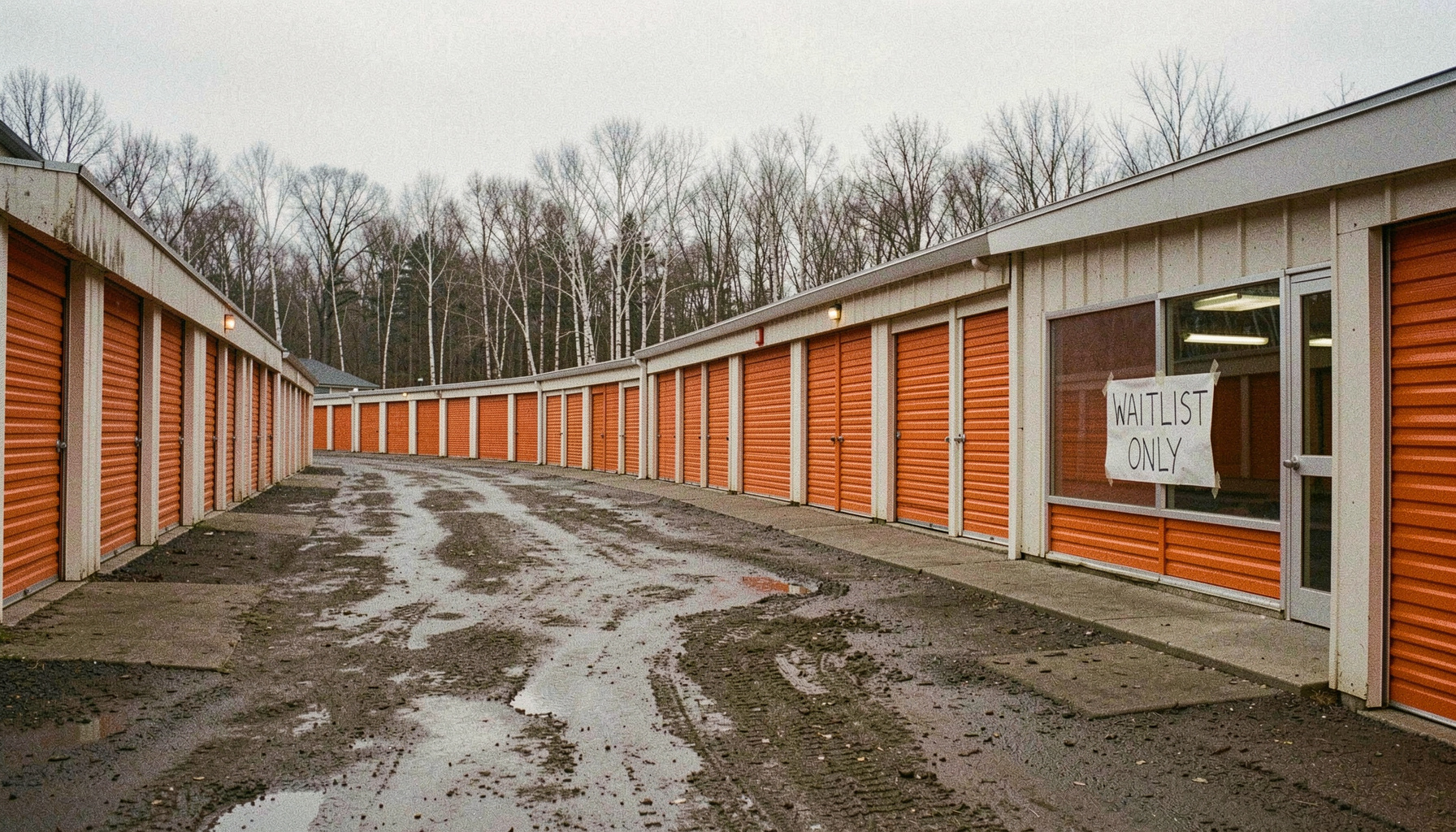
Drive the back roads outside Burlington on a weekday morning and you will notice the corrugated metal rooflines multiplying between the dairy farms and the ski-town strip malls. The padlocks are almost always new. The units are almost always full.
Self-storage operators across Vermont told NPR in May 2026 that business is running hotter than at any recent point in memory. Waitlists are common. Rate increases are holding. The operators who sat for interviews described a demand curve that has not flattened since the early pandemic years, when two distinct pressures arrived at roughly the same time and have not left.
The first is housing. Vermont's residential inventory has been tight for years, and the downstream effect is predictable: people moving into smaller apartments, crashing with family, or bouncing between rentals need somewhere to put the sectional sofa and the filing cabinet and the boxes from the last three moves. Storage units absorb what the housing market cannot.
The second pressure is demographic. Vermont has one of the oldest median populations in the country, and its baby boomers are downsizing at volume. The family home gets listed; the contents do not all fit in the condo. The unit on Route 2 gets rented. The waitlist gets one name longer.
Operators described the customer mix as genuinely broad — recent college graduates splitting a one-bedroom, retirees clearing out a four-bedroom colonial, small-business owners who ran out of garage space. The common thread is not income bracket or age. It is square footage they do not have.
The national self-storage sector has been one of commercial real estate's more resilient performers through successive economic cycles, and Vermont's local operators appear to be riding that same current. Several told NPR they are already scouting adjacent land for expansion. The waitlists, for now, are not getting shorter.