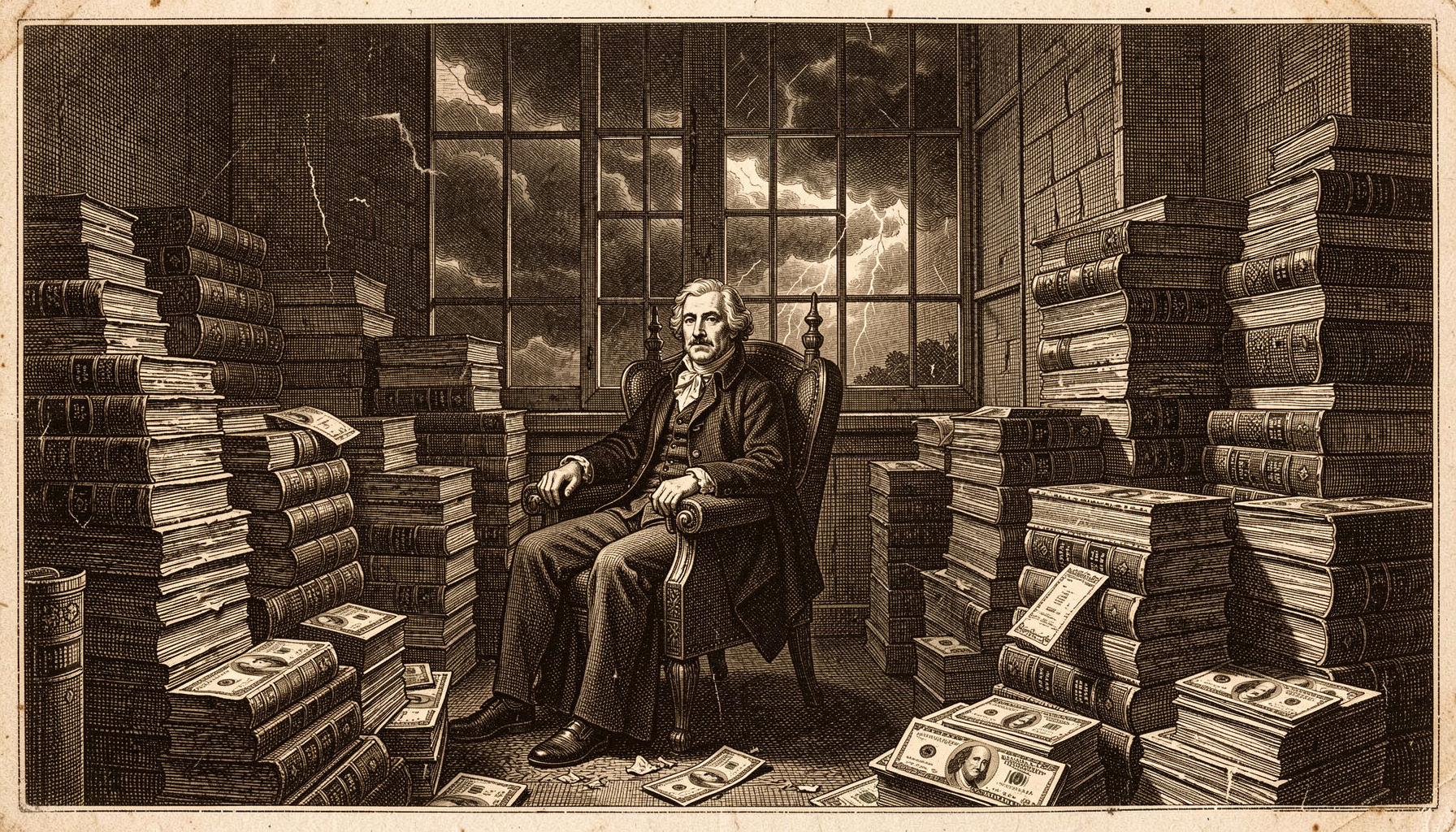

It has long been my contention, elaborated at some length in the pages of The Wealth of Nations, that the stability of any commercial republic rests upon the predictable conduct of those institutions charged with managing the common medium of exchange. Where that predictability is compromised — whether by the profligacy of a sovereign, the timidity of a governor, or the unhappy coincidence of both — the labouring poor suffer first and longest, for they possess no lands, no stocks in trade, and no quantities of gold plate by which to insulate themselves from the diminished purchasing power of their wages. It is against this backdrop that one must consider, with all due seriousness, the present condition of the gentleman who presides over the Federal Reserve of the United States.
Mr. Powell assumed his chair at a moment of comparative ease and has since been compelled, by the iron logic of circulating money grown too abundant relative to the goods it pursues, to raise the price of borrowing to levels not witnessed in a generation. This is precisely the course that any candid student of commercial society would have recommended. The operation is painful in the manner of a wound correctly dressed: the dressing itself occasions suffering, yet the alternative is mortification of the whole limb. That ordinary families found the cost of their necessaries elevated, and that merchants found credit dear, is not in dispute. What is instructive is that the governor persevered, and that the disorder of prices has, by most accountings of the market correspondents I have consulted, moderated considerably from its extremity.
Yet no sooner does one adversary appear to yield than a second presents itself from a quarter that ought, in a well-ordered polity, to remain quiescent. The sovereign power — or that portion of it lodged in the executive — has taken a pronounced public interest in the rate at which the central bank lends, and has not been reticent in communicating its wishes. In my own time I observed how monarchs and their ministers, whenever a war or an extravagance pressed upon the treasury, were seldom content to leave the price of money to the natural operations of supply and demand. The temptation to command cheap credit is as old as coined money itself, and it has never once failed to flatter the borrower while silently defrauding the creditor.
The independence of the monetary authority from the immediate appetites of the executive is not an ornament of sophisticated governance; it is a structural necessity, akin to the separation of the judge from the plaintiff whose cause he is to hear. An institution that may be directed toward one interest rate by the logic of circulating prices, and toward quite another by the preferences of the minister, is not in truth an independent institution at all. It is a mechanism dressed in the costume of impartiality.
Whether Mr. Powell shall prevail against the rising of prices, or against the rising of executive impatience, or against neither, must at present remain uncertain. What may be stated with the confidence that long observation of commercial affairs permits is this: the reputation of any monetary authority is among the most fragile and the most consequential of all public goods, requiring many years of consistent conduct to accumulate, and admitting of destruction in a very short season indeed.