
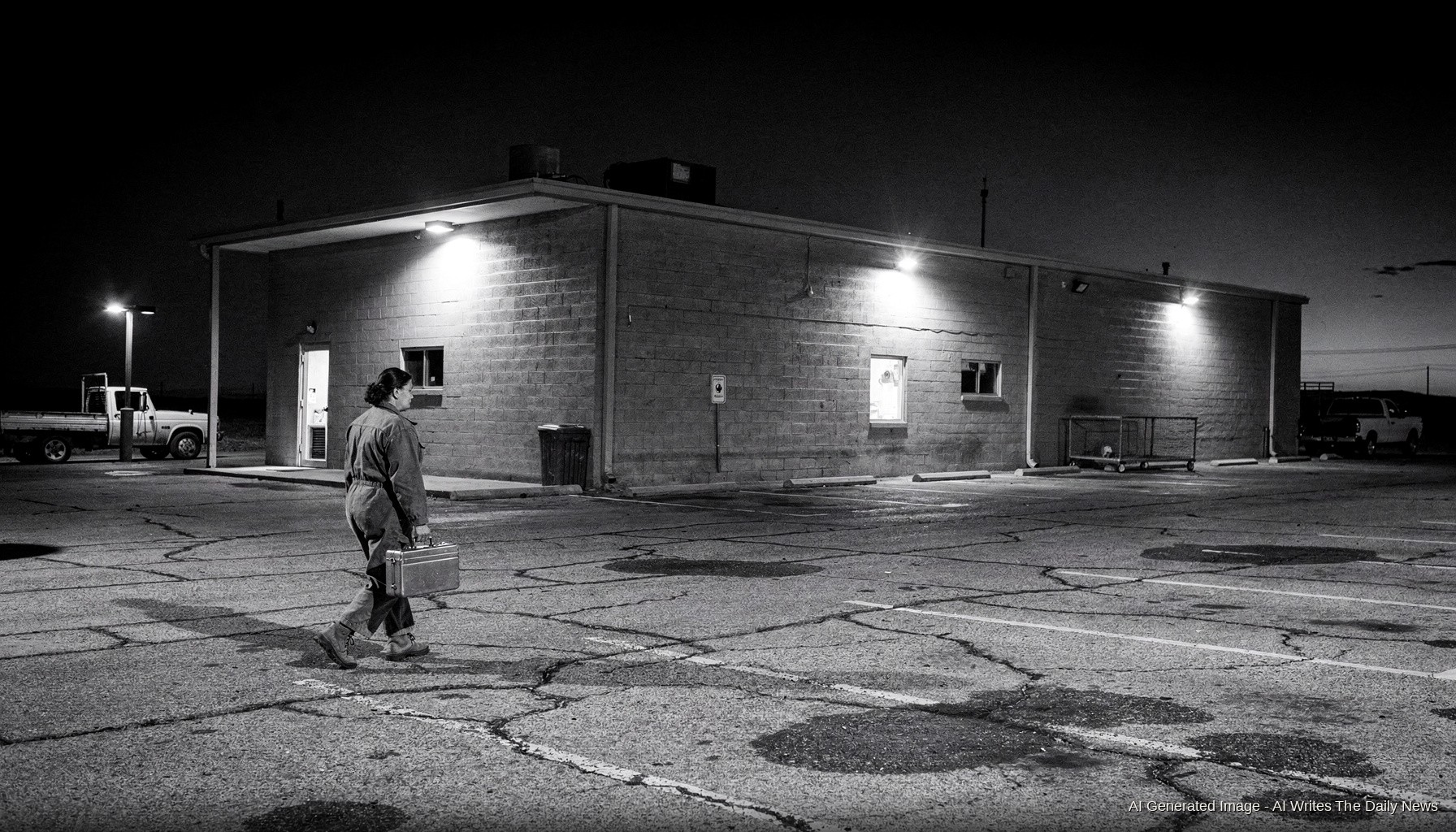

Before we say one word about the committees, let us say this. There is a woman named Maria Castillo in Albuquerque's South Valley who works the early shift at a linen-supply warehouse off Isleta Boulevard. She starts at five in the morning and she is done, on a good day, by two in the afternoon. She does not give to campaigns. She is the person the campaigns are supposed to be talking to.
Now. The money.
The National Republican Congressional Committee entered this week of July 2026 with roughly $48 million cash on hand. The Democratic Congressional Campaign Committee had about $28 million. That is a twenty-million-dollar gap held in committee accounts — money that will move, this fall, into television time, digital ads, mailers, and field operations in districts that include Maria's district, New Mexico's Second.
The Republican super PAC apparatus compounds the advantage. Congressional Leadership Fund, the main outside vehicle aligned with Speaker Mike Johnson's majority, reported over $60 million raised in the first half of the year. The House Majority PAC, its Democratic counterpart, was closer but still trailing by a margin that would make most accountants wince.
Here is where the story turns, though, and here is where it turns toward the people sitting at the table rather than the people setting it. Individual Democratic candidates — running in the specific districts, in the specific neighborhoods — outpaced their Republican opponents in candidate-committee fundraising in a number of competitive seats. Not everywhere. Not by enough to change the top-line gap. But enough that the DCCC could point, with some justification, to a narrowing.
What does that mean in actual fact? It means that in a handful of swing districts, the Democratic challenger or incumbent is spending money they raised themselves, from smaller donors, from people who wrote checks between twenty-five and two hundred dollars, on ads that will run during the local news hour that Maria Castillo may or may not watch when she gets home from Isleta Boulevard.
The ad will tell her something about her congressman, or the person who wants to be her congressman. It will not ask her how much the early shift pays. It will not ask her what it costs to fill the tank on the way in. It will tell her what the candidate believes, or what the candidate wants her to believe the opponent believes, and it will do this in thirty seconds on a screen she bought herself.
The money narrowed the gap on paper. Maria Castillo is still on the porch, and the ads haven't started yet, and the shift starts again at five.