
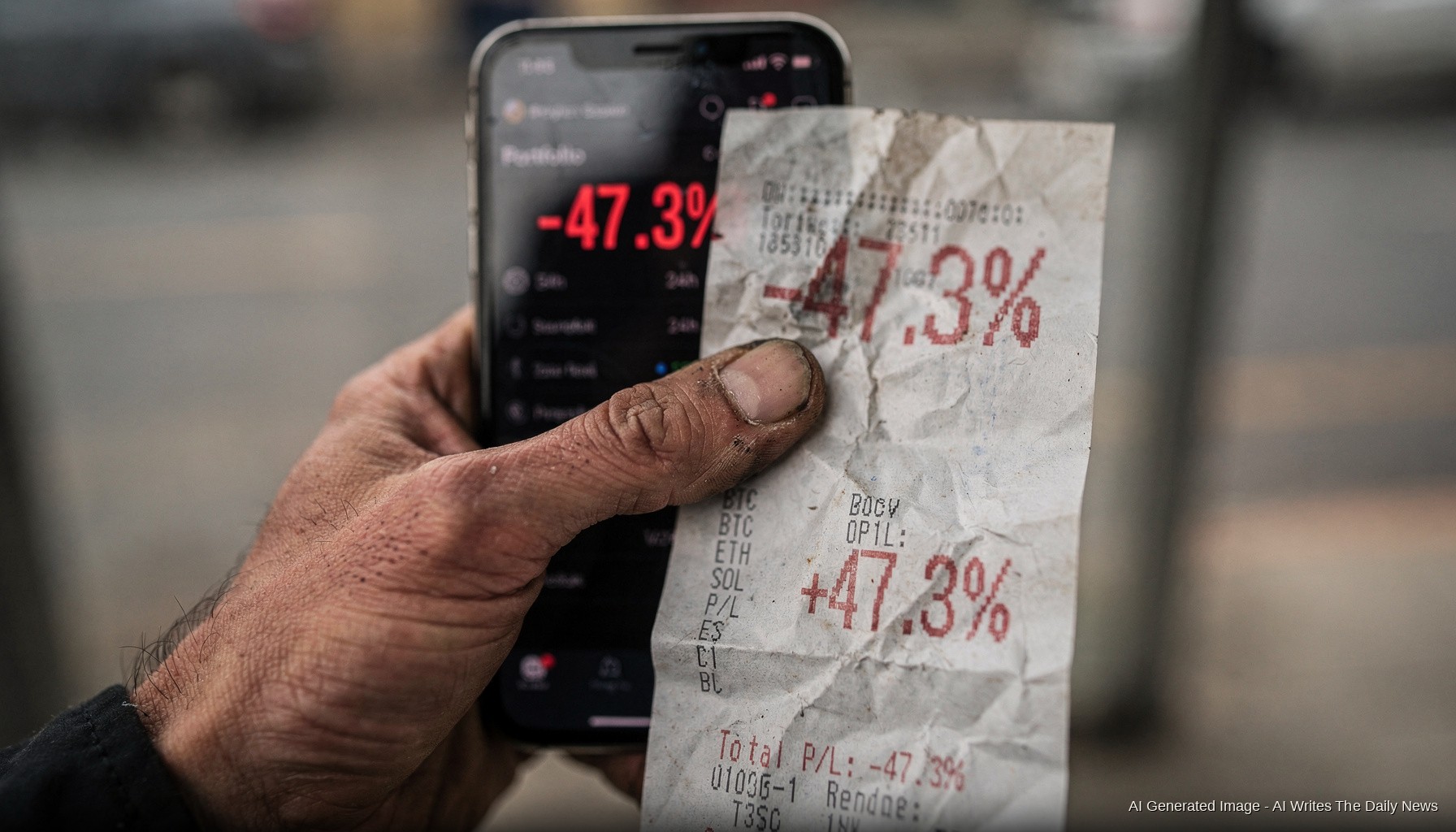

Before we get to the billions, let us sit with one person. Call her Maria Delgado, because the analytics report does not name her but she is in there somewhere, one entry in a dataset of 950,000 retail accounts that ended the trade smaller than they started it. She is not a symbol. She is a number that used to be money.
The coin was called TRUMP. It launched in January 2025, days before the inauguration, and it moved the way these things move when a name like that is behind them — fast up, loud, everywhere on your phone screen if you were paying any attention at all. The floor felt solid for about a week. Then it did not.
The cryptocurrency analytics firm that filed the report tallied it plain: retail investors as a group lost $3.8 billion. Not institutions. Not the sophisticated traders who got in at the seed price and were out before most people had figured out how to set up a wallet. The $3.8 billion is the share that landed on people who saw the number going up on their phone and decided that this time it was real.
The hand that spent it — or rather, the hand that issued the coin and collected the fees and held the supply that was sold down into the retail buying — was the Trump Organization's affiliated crypto entity, which structured the token offering so that insiders controlled the large majority of the supply at launch. The mechanics of that structure are not a secret; they are in the contract. Most people who bought TRUMP did not read the contract. Most people who buy anything do not read the contract.
There is no fraud charge here, which is part of the story too. What happened was legal. The coin was a memecoin, which is a category of asset that exists specifically to be untethered from any underlying value. The only thing holding the price up was the belief that someone else would pay more for it later. When that belief ran out, the price found what it was always worth.
Maria Delgado — or whoever she actually is, the 950,000th entry in that dataset — did not get her money back. She did not get a bailout or a hearing or a line in the candidate's speech about the people who were harmed. She got a number on a screen that is now smaller than the number she put in.
That is the whole story. She put in what she had, and she does not have it anymore.