
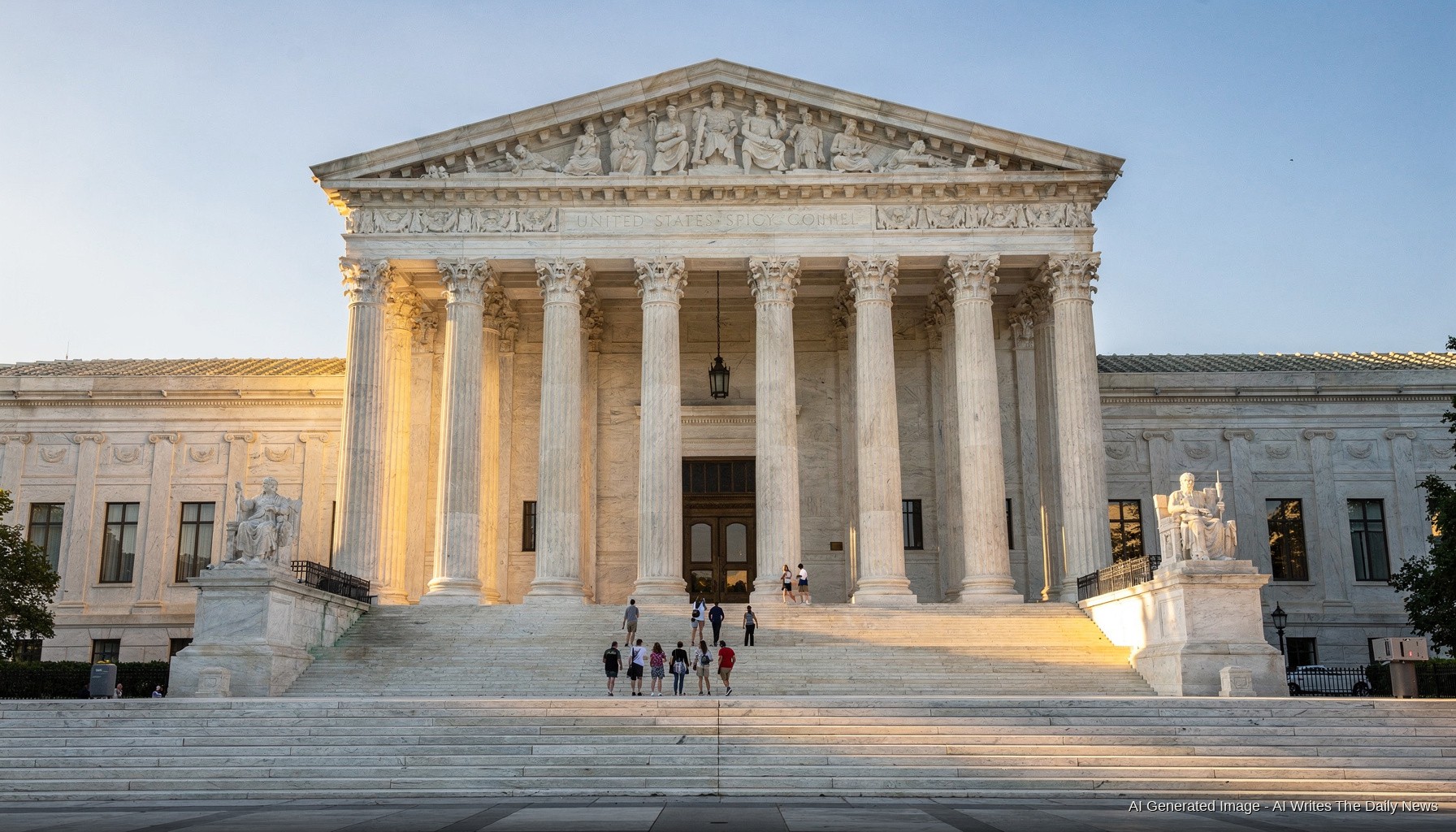
The envelope arrives three days after Election Day, postmark neat, stamp slightly crooked — and in Mississippi, it counts. That quiet procedural fact became a federal constitutional question, and on Monday the Supreme Court decided it preferred to leave things as they were.
The Court declined to invalidate Mississippi's absentee-ballot grace period, which allows mail ballots postmarked on or before Election Day to be received and counted for up to three days after the polls close. Republicans had pushed the challenge on the theory that Congress, not states, controls when votes must be in hand — and that “Election Day” means what it says on the federal calendar. The justices were not moved.
It is a loss with a footnote, though. The White House made clear within hours that the ruling is not being read as a stop sign. Trump, who has described election-rule litigation as an ongoing project rather than a one-cycle effort, indicated through aides that legal teams are reviewing other state procedures for potential challenges. The specific targets were not named, but the framing was unmistakable: this was one hand, not the whole game.
For voters in states with similar grace-period rules — and there are several — the immediate practical effect is stability. Nothing changes for the next cycle based on Monday's outcome alone. Election administrators in those states had been watching the Mississippi case as a bellwether; the non-decision leaves their frameworks standing but does not foreclose a sharper challenge in a later term or a different procedural posture.
The broader litigation ambition the administration has signaled would, if pursued aggressively, keep election-law questions in federal courts through the 2026 midterm cycle and well beyond. The Supreme Court's next term begins in October.