
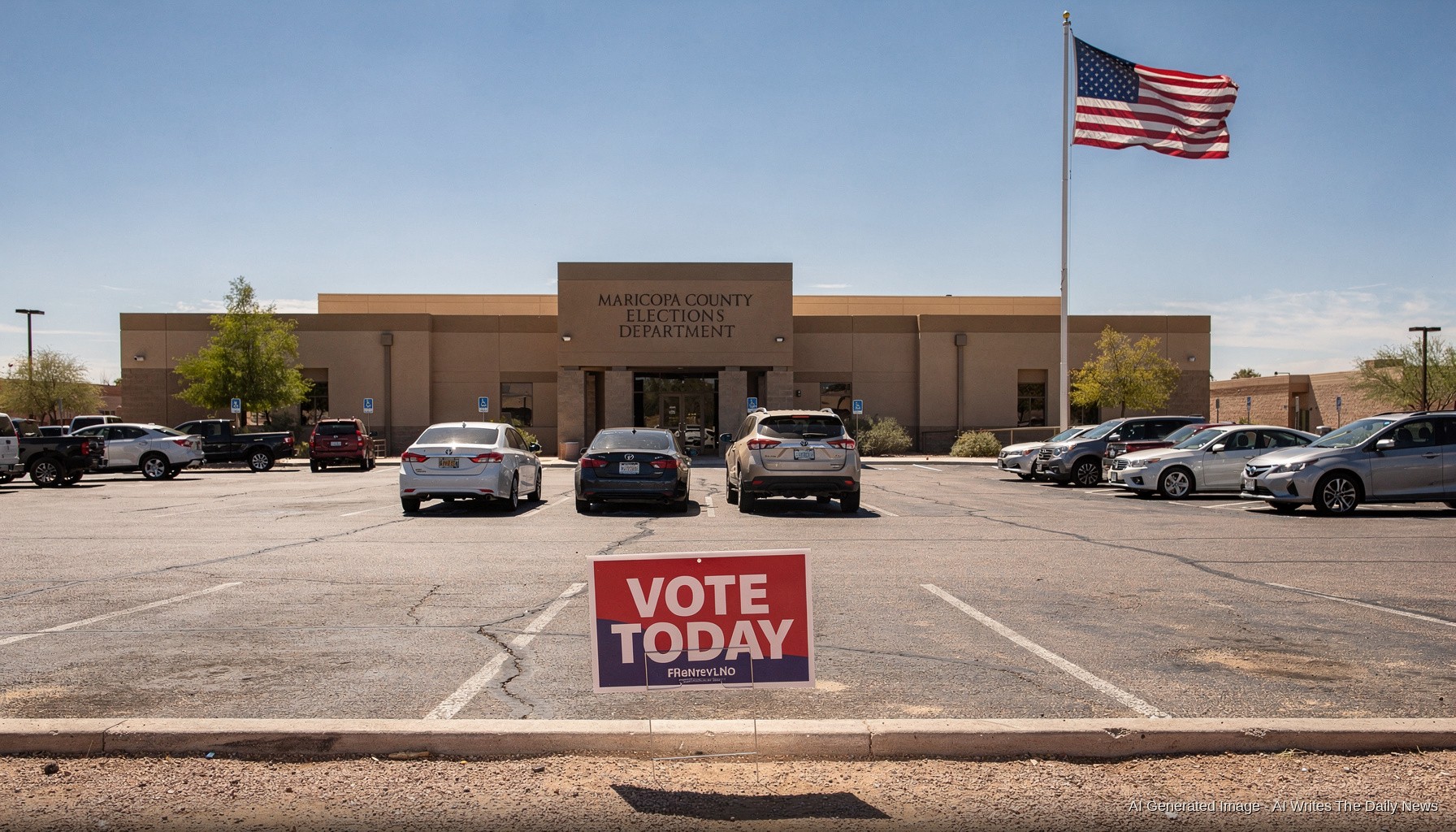
There was a time, not long ago, when running elections in Maricopa County was the kind of government work that rarely made the national news. Republicans largely managed the machinery. Democrats watched. Ballots were counted. Results were certified. Then came 2020, and the job description changed considerably.
A new report from Political Wire, published Sunday, traces what has happened to Arizona's largest county in the years since — a slow-motion fracture inside an institution that was never engineered to survive the kind of sustained pressure it has been absorbing. The officials who once shared conference rooms and process manuals have, in many cases, stopped trusting each other. The rules that governed their disagreements assumed a baseline of good faith that no longer fully exists.
The damage is structural as much as personal. Election administration systems in counties like Maricopa are built on layered procedures, informal norms, and inter-office relationships that accumulate over election cycles. Strip out the norms, and the procedures start to buckle. Maricopa has been stripped.
The pressure has come from multiple directions — from candidates who lost and said so publicly and loudly, from activists who turned certification meetings into confrontations, and from officials within the same party who found that challenging the count was more useful to them politically than defending it. That last part is the part the system was least prepared for.
With the 2026 midterms now less than five months out, Maricopa will once again sit at the center of national scrutiny. The question being asked inside the county's administrative offices, according to the Political Wire account, is no longer just whether the results will be accurate — it is whether the people and structures responsible for producing those results will still be functional when the night is over.